

 Business License
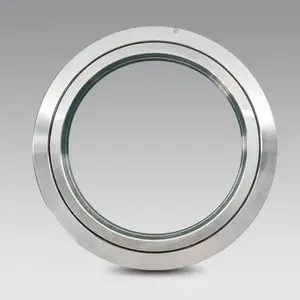
Bearing Mounting and Dismounting – Techniques to Avoid Damage During Installation
Correct mounting is critical — damage during installation accounts for a significant percentage of premature bearing failures. Many of these failures can be prevented with proper tooling and technique.
When to use mechanical, hydraulic, or heat mounting methods
| Method | Applicable bearing size | Advantages |
|---|---|---|
| Mechanical press (cold mounting) | All sizes (with proper support) | Simple, widely available tooling |
| Hydraulic press (cold mounting) | All sizes | Controlled force application, safety benefits |
| Induction heating | Medium to large sizes | Clean, uniform heating, no risk of overheating |
| Oven heating | Medium to large sizes | Uniform heating, suitable for multiple bearings |
Tolerance class and fit selection
The correct fit depends on operating conditions, load magnitude, and rotational requirements:
Running fits (tight on rotating ring) — select tighter interference fits to avoid spinning damage from true brinelling.
Stationary fits (loose on non-rotating ring) — sliding fits for easy disassembly (important to inspect for impact scoring on bore).
High speed / low load applications — trending looser in rotating ring to avoid excessive preload.
Consult the manufacturer‘s engineering tables or request a support review of shaft and housing fit classes before final mounting [4†L47-L50].
Common mounting mistakes to avoid
Using a hammer directly on bearing rings — hammering directly on a bearing transmits shock through rolling elements, creating surface indentations (brinelling). Always use precision mounting tooling.
Applying force through the wrong ring — when mounting an inner ring onto a shaft, force must be applied ONLY to the inner ring. Force transmitted through rolling elements
Inadequate shaft shoulder preparation — the shaft shoulder supporting the bearing must have the correct radius (r) and corner clearance. Sharp corners cause stress concentrations and eventual ring cracking.
Mounting sequence errors — the correct order for component assembly must be followed — radial bearings on stepped shafts, labyrinth seals or distance rings placed before bearing mounting [9†L21-L23].
Inspection after mounting
After mounting, the bearing must rotate freely through at least two full revolutions to check for misalignment or interference. Rotate the assembled shaft by hand, listening for grinding or scraping sounds. Measure runout after final torque sequencing of housing bolts.
How Ouna Bearing supports proper installation
At Luoyang Ouna Bearing, we provide mounting instructions with every shipment. Our crossed roller bearings, high-precision rotary table bearings, and four-point contact ball slewing bearings are designed for straightforward assembly with standard industrial tooling. Contact us if your specific mounting condition (e.g., non-standard shaft material, restricted access) requires custom installation guidance — or request our mounting troubleshooting checklist for your most common failure modes.
Recently Posted
-
Made in Luoyang – China‘s Bearings Have Come of Age. Here‘s Why You Should Take Notice
July 28, 2026For international buyers who have hesitated to source precision bearings from China, the evidence is now overwhelming: China‘s bea Read More
 -
ORT Series Rotary Table Bearings – The Smart Buyer‘s Choice for High‑Precision CNC Applications
July 28, 2026For CNC machine tool builders, the rotary table bearing is a mission-critical component. Its performance directly determines posit Read More
 -
Seize the Humanoid Robot Boom – The Bearing Market‘s Biggest Growth Opportunity
July 28, 2026The humanoid robot industry is transitioning from research labs to commercial production—and precision bearings are at the center Read More
 -
China’s Bearing Industry Has Come of Age – Here’s Why Global OEMs Are Paying Attention
July 28, 2026If you have historically sourced precision bearings only from traditional European and Japanese manufacturers due to quality conce Read More

Contact Us
Recommended Products
-
 Thin-Walled Crossed Roller Bearings ORA 20013NegotiableMOQ: 5 Pieces
 -
Thin-Walled Crossed Roller Bearings ORA 19013NegotiableMOQ: 5 Pieces
-
Thin-Walled Crossed Roller Bearings ORA 6008NegotiableMOQ: 5 Pieces
-
Thin-Walled Crossed Roller Bearings ORA 5008NegotiableMOQ: 5 Pieces
-
Thin-Walled Crossed Roller Bearings ORE 15025NegotiableMOQ: 5 Pieces

-
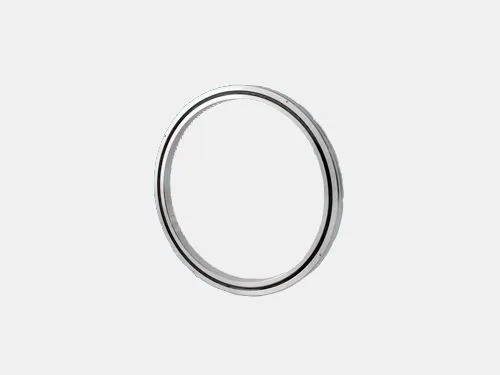
Thin-Walled Crossed Roller Bearings ORE 14016NegotiableMOQ: 5 Pieces
-
Thin-Walled Crossed Roller Bearings ORE 2508NegotiableMOQ: 5 Pieces
-
Thin-Walled Crossed Roller Bearings ORE 2008NegotiableMOQ: 5 Pieces
-
OKLDF Thrust Angular Contact Ball Bearings Series OKLDF 150NegotiableMOQ: 5 Pieces
-
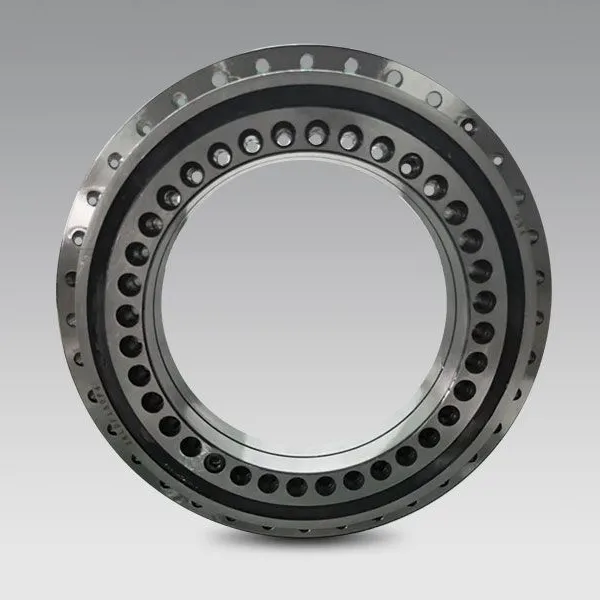
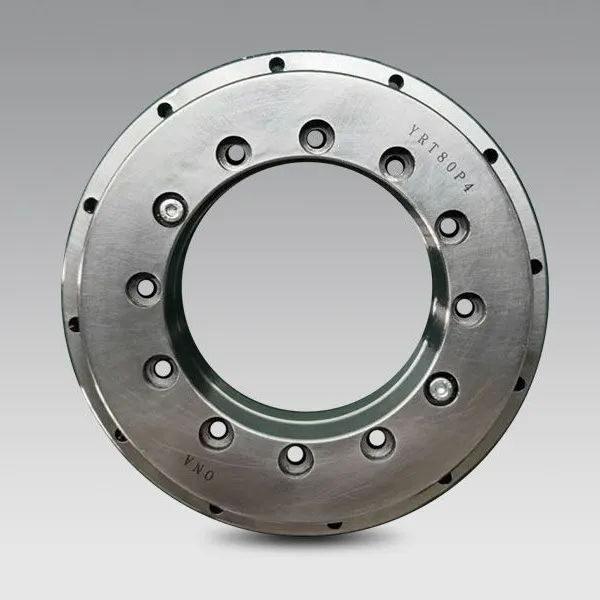
High Precision Rotary Table Bearings ORT 200NegotiableMOQ: 5 Pieces
-
High Precision Rotary Table Bearings ORT 150NegotiableMOQ: 5 Pieces
-
High Precision Rotary Table Bearings ORT 120NegotiableMOQ: 5 Pieces
-
High Precision Rotary Table Bearings ORT 100NegotiableMOQ: 5 Pieces
-
High Precision Rotary Table Bearings ORT 80NegotiableMOQ: 5 Pieces
-
High Precision Rotary Table Bearings ORT 50NegotiableMOQ: 5 Pieces

-
High Precision Rotary Table Bearings ORT 260NegotiableMOQ: 5 Pieces
-
High Precision Rotary Table Bearings ORT 180NegotiableMOQ: 5 Pieces
-
OKLDF Thrust Angular Contact Ball Bearings Series OKLDF 120NegotiableMOQ: 5 Pieces
-
OKLDF Thrust Angular Contact Ball Bearings Series OKLDF 325NegotiableMOQ: 5 Pieces
-
OKLDF Thrust Angular Contact Ball Bearings Series OKLDF 580NegotiableMOQ: 5 Pieces
