

 Business License
Bearing Lubrication Guide — Selecting the Right Grease or Oil for Your Application
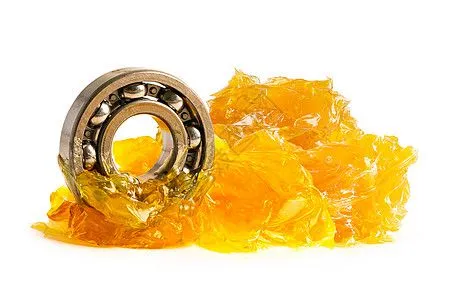
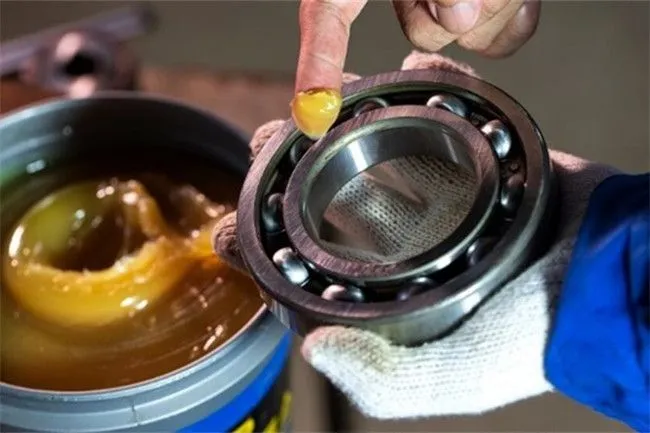
Proper lubrication is the single most important factor in achieving maximum bearing service life. Lubrication-related issues cause more bearing failures than any other category combined [1†L26-L31]. Yet lubricant selection remains widely misunderstood.
How to choose between grease and oil
The choice between grease and oil depends on your specific operating conditions.
General guidance: NLGI Grade 2 grease covers most bearing applications from -30°C to +120°C. Use Grade 1 for low-temp or high-speed applications. Switch to oil when speeds exceed grease capability or cooling is required.
NLGI consistency grades explained [7†L2-L4]:
NLGI #000 — semi-fluid: for centralized systems, gearboxes.
NLGI #00 — very soft: for centralized lubrication.
NLGI #0 — soft: for low-speed, low-temp applications.
NLGI #1 — very fluid: for low-temperature, high-speed applications [3†L21-L23].
NLGI #2 — standard: for general applications (most common choice) [3†L21-L23].
NLGI #3 — stiff: for large, slow bearings or vertical shafts.
Base oil type selection — the base oil determines the lubricant‘s fundamental operating range:
Mineral oil — adequate for general industrial applications (dirt cheap, widely available).
Synthetic oil (PAO, ester) — required for extreme temperatures (-60°C to +250°C), extended relubrication intervals.
PFPE (perfluoropolyether) — needed for aggressive chemical environments, oxygen service.
Thickener type determines grease structure and behavior:
Lithium complex — the workhorse of general-purpose lubricants (water-resistant, mechanically stable, -30°C to +150°C).
Polyurea — preferred for electric motor bearings (long life, high-temperature stability).
Calcium sulfonate — exceptional extreme-pressure and water-resistant properties (ideal for steel mills and wet environments).
Application-specific recommendations [1†L28-L30]:
| Application | Recommended lubricant | Reason |
|---|---|---|
| High-speed spindle (>10,000 RPM) | Oil or NLGI #1 synthetic | Low churning loss, heat removal |
| Electric motor bearings | Polyurea grease, NLGI #2 | Long life, high-temperature stability |
| Robot joint bearings | Low-friction grease | Consistent torque, long relubrication interval |
| Machine tool rotary table | Lithium complex grease, NLGI #2 | Good load-carrying, water resistance |
| Low-temperature application (-40°C) | NLGI #1 synthetic (PAO) | Fluidity at low temperature |
| High-temperature furnace bearing | PFPE or high-temperature synthetic | Thermal stability above 150°C |
How Ouna Bearing supports your lubrication needs
At Luoyang Ouna Bearing, all precision bearings — crossed roller bearings, ORT series rotary table bearings, and four-point contact ball slewing bearings — are manufactured to P5, P4 and P2 precision grades and initial-greased according to customer specifications. Contact us with your operating conditions (load, speed, temperature, environment), and we‘ll recommend the optimal lubricant for your specific application — including special greases for extreme conditions and custom relubrication interval calculations.
Recently Posted
-
Made in Luoyang – China‘s Bearings Have Come of Age. Here‘s Why You Should Take Notice
July 28, 2026For international buyers who have hesitated to source precision bearings from China, the evidence is now overwhelming: China‘s bea Read More
 -
ORT Series Rotary Table Bearings – The Smart Buyer‘s Choice for High‑Precision CNC Applications
July 28, 2026For CNC machine tool builders, the rotary table bearing is a mission-critical component. Its performance directly determines posit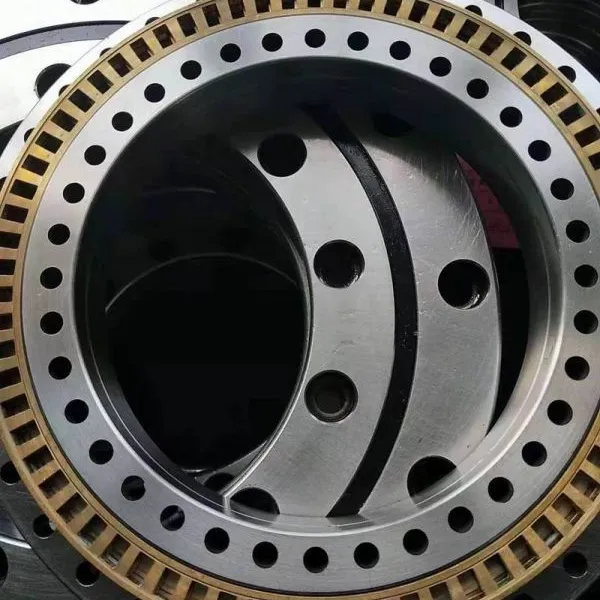 Read More
 -
Seize the Humanoid Robot Boom – The Bearing Market‘s Biggest Growth Opportunity
July 28, 2026The humanoid robot industry is transitioning from research labs to commercial production—and precision bearings are at the center Read More
 -
China’s Bearing Industry Has Come of Age – Here’s Why Global OEMs Are Paying Attention
July 28, 2026If you have historically sourced precision bearings only from traditional European and Japanese manufacturers due to quality conce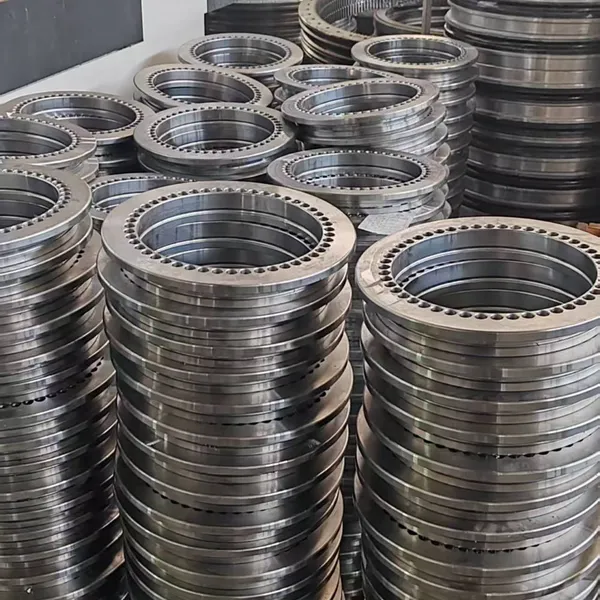 Read More

Contact Us
Recommended Products
-
 Thin-Walled Crossed Roller Bearings ORA 20013NegotiableMOQ: 5 Pieces
 -
Thin-Walled Crossed Roller Bearings ORA 19013NegotiableMOQ: 5 Pieces
-
Thin-Walled Crossed Roller Bearings ORA 6008NegotiableMOQ: 5 Pieces
-
Thin-Walled Crossed Roller Bearings ORA 5008NegotiableMOQ: 5 Pieces
-
Thin-Walled Crossed Roller Bearings ORE 15025NegotiableMOQ: 5 Pieces

-
Thin-Walled Crossed Roller Bearings ORE 14016NegotiableMOQ: 5 Pieces
-
Thin-Walled Crossed Roller Bearings ORE 2508NegotiableMOQ: 5 Pieces
-
Thin-Walled Crossed Roller Bearings ORE 2008NegotiableMOQ: 5 Pieces
-
OKLDF Thrust Angular Contact Ball Bearings Series OKLDF 150NegotiableMOQ: 5 Pieces
-
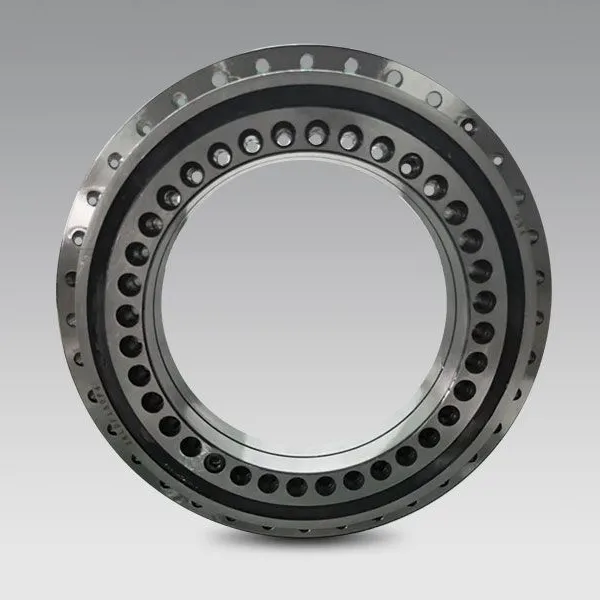
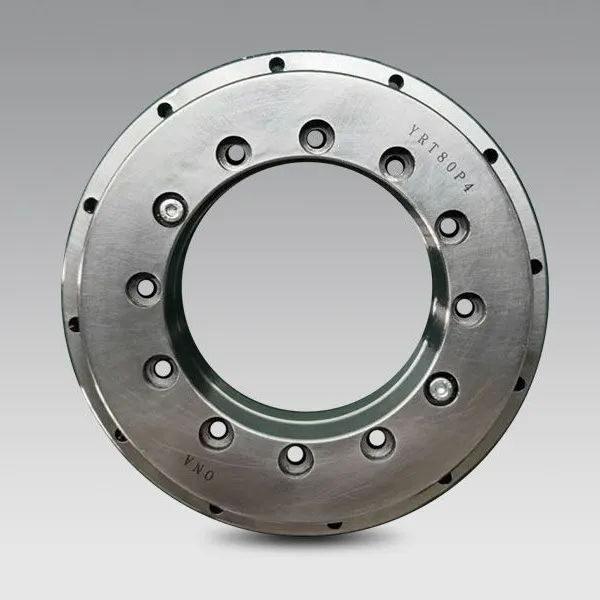
High Precision Rotary Table Bearings ORT 200NegotiableMOQ: 5 Pieces
-
High Precision Rotary Table Bearings ORT 150NegotiableMOQ: 5 Pieces
-
High Precision Rotary Table Bearings ORT 120NegotiableMOQ: 5 Pieces
-
High Precision Rotary Table Bearings ORT 100NegotiableMOQ: 5 Pieces
-
High Precision Rotary Table Bearings ORT 80NegotiableMOQ: 5 Pieces
-
High Precision Rotary Table Bearings ORT 50NegotiableMOQ: 5 Pieces

-
High Precision Rotary Table Bearings ORT 260NegotiableMOQ: 5 Pieces
-
High Precision Rotary Table Bearings ORT 180NegotiableMOQ: 5 Pieces
-
OKLDF Thrust Angular Contact Ball Bearings Series OKLDF 120NegotiableMOQ: 5 Pieces
-
OKLDF Thrust Angular Contact Ball Bearings Series OKLDF 325NegotiableMOQ: 5 Pieces
-
OKLDF Thrust Angular Contact Ball Bearings Series OKLDF 580NegotiableMOQ: 5 Pieces
