

 Business License
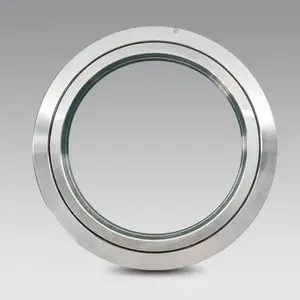
Innovations in Bearing Monitoring — From Traditional Inspection to Smart Maintenance
Modern industrial operations demand more than just reliable bearings—they require intelligence. As factories adopt predictive maintenance strategies, integrating bearing condition monitoring has moved from optional to essential.
The evolution of bearing condition monitoring
Traditional bearing inspection relied on periodic manual checks: listening for abnormal noise, feeling for excessive temperature, or replacing components on fixed schedules. While vibration analysis has been the standard for the past five years, industry experts now note that vibration detection only catches damage after it has begun. When bearings start vibrating or gearboxes begin overheating, damage has already occurred—you‘re responding to consequences rather than preventing failures.
Next-generation technologies
By 2026, predictive maintenance is scaling from concept to widespread implementation. By integrating equipment operating data, environmental conditions, and historical failure records, systems can predict remaining useful life (RUL) of core components, shifting maintenance from reactive to proactive.
Several technologies now work in combination:
Ultrasound detection: NASA has developed ultrasound technology that detects bearing damage at its earliest stage. When combined with artificial intelligence, ultrasound data can enable condition-based maintenance breakthroughs. Unlike vibration signals that can interfere between nearby equipment, ultrasound provides “pure” data at high information density—a few seconds of measurement time is sufficient for reliable evaluation.
Machine learning for acoustic detection: Researchers have developed machine learning-based methods to detect ball bearing faults through acoustic signals alone, proving that this innovative methodology can potentially revolutionize predictive maintenance strategies.
Smart bearings: Optical fiber sensors embedded directly within bearings convert traditional components into intelligent, data-driven systems capable of anticipating problems and increasing operational efficiency.
Environmental monitoring as the new frontier
The next generation of predictive maintenance (PdM 2.0) focuses not on detecting symptoms but on detecting causes of wear, which are most often environmental factors. Microscopic particles, tiny dust ingress, and air quality differences determine equipment lifespan long before any vibration alarm sounds. A 5-micron particle entering a high-speed bearing today may only trigger vibration symptoms three months later. Forward-looking plants now integrate smart air management into industrial IoT platforms, correlating inlet pressure differentials and particulate loads directly with equipment performance.
Implementation considerations
Projects should begin by identifying critical equipment where failure consequences are severe and maintenance costs are high. At least 3-6 months of normal operating data must be accumulated to establish effective health assessment baselines before reliable predictions are possible. Starting with simple threshold alarms before gradually introducing statistical learning and deep learning models is the recommended path.
How Ouna Bearing supports smart maintenance
At Luoyang Ouna Bearing, our precision products (P5, P4, P2) are designed for compatibility with modern condition monitoring systems. Our crossed roller bearings and rotary table bearings feature consistent, predictable behavior that enables accurate baseline establishment for AI-driven health assessments. Our quality documentation supports OEMs implementing smart maintenance systems by providing traceable performance data.
Ready for predictive maintenance? Contact us to discuss how our precision bearings integrate with your condition monitoring strategy or request technical data supporting AI-driven health assessment implementation for your equipment.
Recently Posted
-
Made in Luoyang – China‘s Bearings Have Come of Age. Here‘s Why You Should Take Notice
July 28, 2026For international buyers who have hesitated to source precision bearings from China, the evidence is now overwhelming: China‘s bea Read More
 -
ORT Series Rotary Table Bearings – The Smart Buyer‘s Choice for High‑Precision CNC Applications
July 28, 2026For CNC machine tool builders, the rotary table bearing is a mission-critical component. Its performance directly determines posit Read More
 -
Seize the Humanoid Robot Boom – The Bearing Market‘s Biggest Growth Opportunity
July 28, 2026The humanoid robot industry is transitioning from research labs to commercial production—and precision bearings are at the center Read More
 -
China’s Bearing Industry Has Come of Age – Here’s Why Global OEMs Are Paying Attention
July 28, 2026If you have historically sourced precision bearings only from traditional European and Japanese manufacturers due to quality conce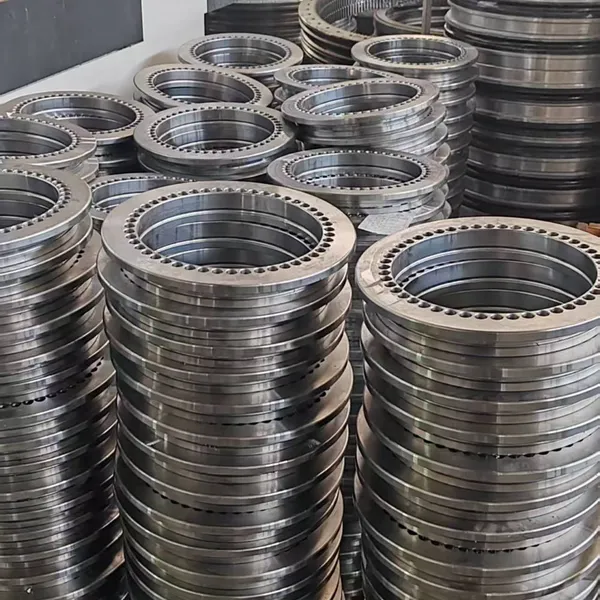 Read More

Contact Us
Recommended Products
-
 Thin-Walled Crossed Roller Bearings ORA 20013NegotiableMOQ: 5 Pieces
 -
Thin-Walled Crossed Roller Bearings ORA 19013NegotiableMOQ: 5 Pieces
-
Thin-Walled Crossed Roller Bearings ORA 6008NegotiableMOQ: 5 Pieces
-
Thin-Walled Crossed Roller Bearings ORA 5008NegotiableMOQ: 5 Pieces
-
Thin-Walled Crossed Roller Bearings ORE 15025NegotiableMOQ: 5 Pieces
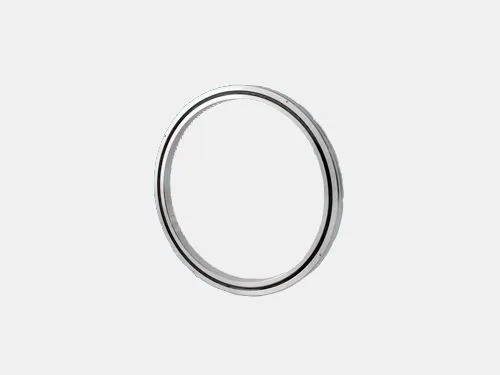

-
Thin-Walled Crossed Roller Bearings ORE 14016NegotiableMOQ: 5 Pieces
-
Thin-Walled Crossed Roller Bearings ORE 2508NegotiableMOQ: 5 Pieces
-
Thin-Walled Crossed Roller Bearings ORE 2008NegotiableMOQ: 5 Pieces
-
OKLDF Thrust Angular Contact Ball Bearings Series OKLDF 150NegotiableMOQ: 5 Pieces
-
High Precision Rotary Table Bearings ORT 200NegotiableMOQ: 5 Pieces
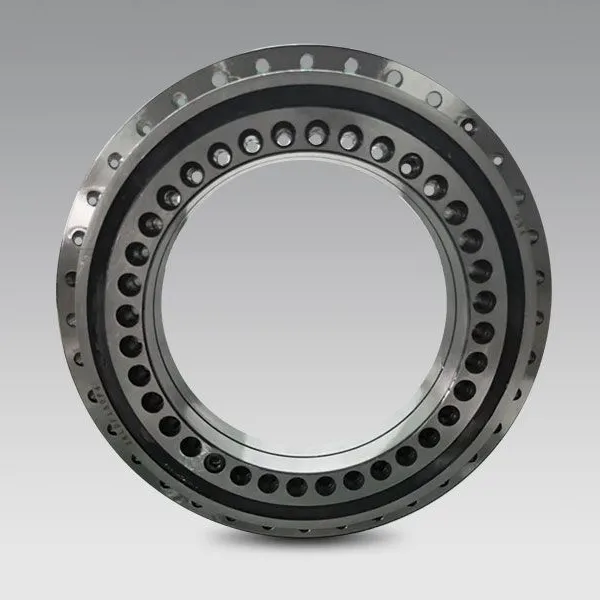
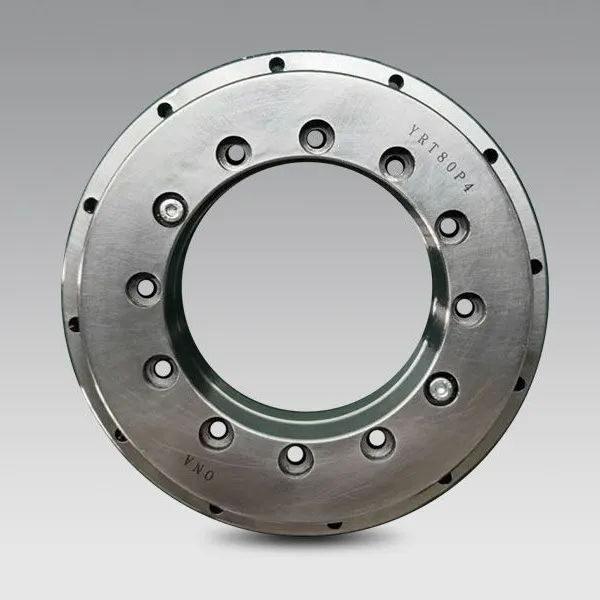
-
High Precision Rotary Table Bearings ORT 150NegotiableMOQ: 5 Pieces
-
High Precision Rotary Table Bearings ORT 120NegotiableMOQ: 5 Pieces
-
High Precision Rotary Table Bearings ORT 100NegotiableMOQ: 5 Pieces
-
High Precision Rotary Table Bearings ORT 80NegotiableMOQ: 5 Pieces
-
High Precision Rotary Table Bearings ORT 50NegotiableMOQ: 5 Pieces

-
High Precision Rotary Table Bearings ORT 260NegotiableMOQ: 5 Pieces
-
High Precision Rotary Table Bearings ORT 180NegotiableMOQ: 5 Pieces
-
OKLDF Thrust Angular Contact Ball Bearings Series OKLDF 120NegotiableMOQ: 5 Pieces
-
OKLDF Thrust Angular Contact Ball Bearings Series OKLDF 325NegotiableMOQ: 5 Pieces
-
OKLDF Thrust Angular Contact Ball Bearings Series OKLDF 580NegotiableMOQ: 5 Pieces
