

 Business License
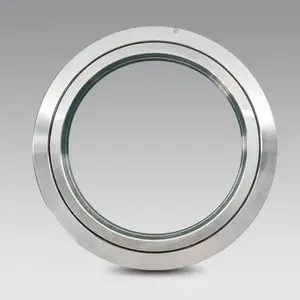
How to Specify Custom Bearings – A Step-by-Step Guide for Procurement and Engineering Teams
Standard catalog bearings cannot always satisfy unique design requirements — special dimensions, unusual load profiles, or specific preload conditions may demand custom solutions.
Step 1: Define basic dimensional requirements
The simplest path to a custom bearing begins with precise dimensions. Provide the following:
Bore diameter (d) — the inner ring‘s inside diameter, in mm
Outer diameter (D) — the outer ring‘s outside diameter, in mm
Width/height (B) — bearing width for radial bearings, height for thrust bearings
Chamfer dimensions (r) — corner radii for housing and shaft clearance
If your design references an existing bearing with modifications, include the base model number. This greatly accelerates the engineering review process.
Step 2: Specify load and performance requirements
Bearing design depends fundamentally on application loading. Provide:
Load characteristics — radial load (kN), axial load (kN), moment load (kN·m), static vs. dynamic loads
Speed requirements — maximum rotational speed (RPM) for bearing inner ring rotation
Precision grade — P5, P4, or P2 for precision-critical applications
Rigidity expectations — deflection limits under specified loading (optional but helpful)
Operating temperature range — min/max expected temperature for material and lubricant validation
Lubrication method — grease, oil mist, or splash feed
If any parameters have not been fully characterized, provide a complete set of finite element analysis (FEA) results or stress calculations [4†L19-L24].
Step 3: Define material and treatment preferences
Bearings for highly corrosive environments — ZnNi plating provides up to 1,000 hours of Neutral Salt Spray (NSS) resistance
Bearings for high-temperature applications — retain dimensionally stability at elevated temperatures with specialized steel grades and heat treatment
Bearings for low-friction requirements — PTFE coatings or solid lubricants reduce friction coefficient without external lubrication
If uncertain about optimal material for your application, provide environmental conditions and let the manufacturer recommend from their material library.
Step 4: Provide application context
Understanding where the bearing will be used helps engineers validate design assumptions:
Application category — rotary table, robot joint, spindle, linear guide, etc.
Equipment type — CNC machine, industrial robot, medical device, precision instrument
Duty cycle — continuous vs. intermittent operation, expected cycles per day
Mounting configuration — shaft and housing fits, adjacent component interfaces
Why Ouna Bearing excels at custom specifications
At Luoyang Ouna Bearing, we accept small to medium batch custom orders across all product lines: crossed roller bearings (ORA, ORB, ORE, ORU, ORAU, ORBH, OSX, OXSU, OXU, ORBS series), ORT series rotary table bearings, precision four-point contact ball slewing bearings, high-precision thrust cylindrical roller bearings, and bearings for humanoid robots. Provide your drawings or technical specifications, and our engineering team will handle the rest — developing non-standard sizes, unique preload settings, and application-specific profiles.
Ready to specify your custom bearing? You can send an inquiry directly with the above points filled in (maximum completeness to speed up preliminary design). Our engineering response typically arrives within 48 hours — including feasibility assessment and initial quotation. Contact us to begin your custom bearing project today — backed by our experience in serving precision equipment manufacturers worldwide.
Recently Posted
-
Made in Luoyang – China‘s Bearings Have Come of Age. Here‘s Why You Should Take Notice
July 28, 2026For international buyers who have hesitated to source precision bearings from China, the evidence is now overwhelming: China‘s bea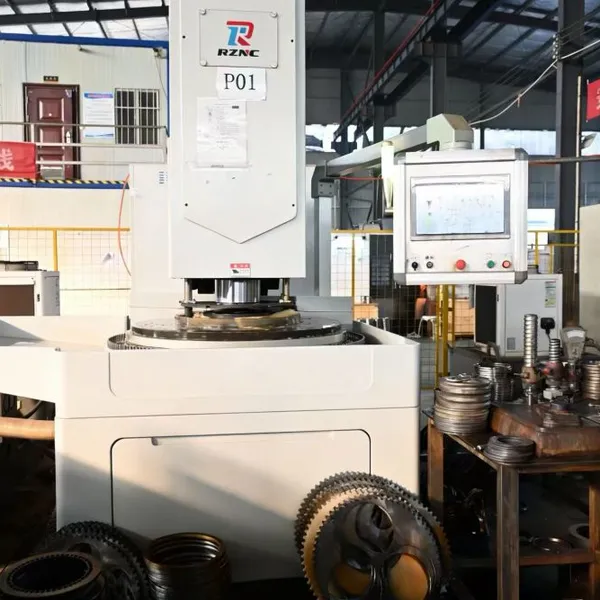 Read More
 -
ORT Series Rotary Table Bearings – The Smart Buyer‘s Choice for High‑Precision CNC Applications
July 28, 2026For CNC machine tool builders, the rotary table bearing is a mission-critical component. Its performance directly determines posit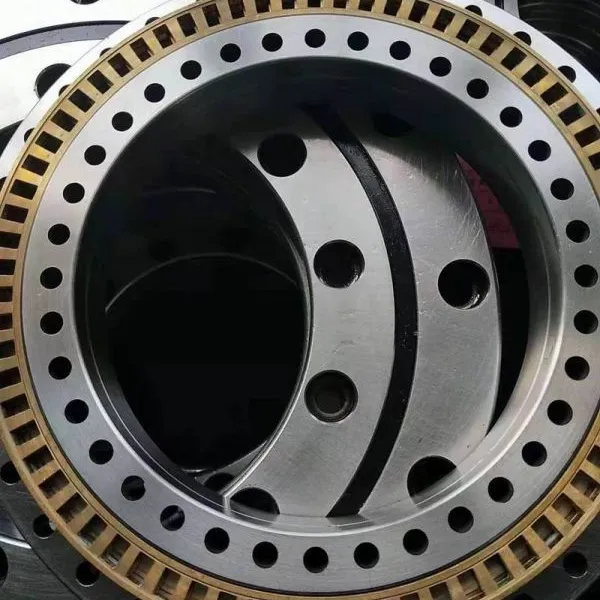 Read More
 -
Seize the Humanoid Robot Boom – The Bearing Market‘s Biggest Growth Opportunity
July 28, 2026The humanoid robot industry is transitioning from research labs to commercial production—and precision bearings are at the center Read More
 -
China’s Bearing Industry Has Come of Age – Here’s Why Global OEMs Are Paying Attention
July 28, 2026If you have historically sourced precision bearings only from traditional European and Japanese manufacturers due to quality conce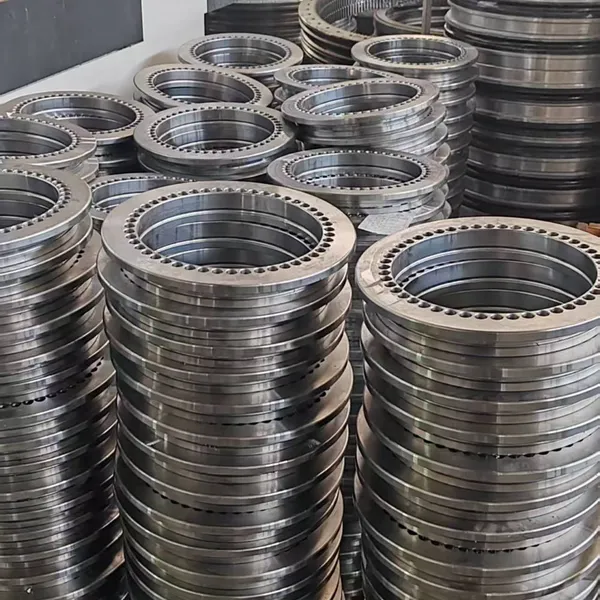 Read More

Contact Us
Recommended Products
-
 Thin-Walled Crossed Roller Bearings ORA 20013NegotiableMOQ: 5 Pieces
 -
Thin-Walled Crossed Roller Bearings ORA 19013NegotiableMOQ: 5 Pieces
-
Thin-Walled Crossed Roller Bearings ORA 6008NegotiableMOQ: 5 Pieces
-
Thin-Walled Crossed Roller Bearings ORA 5008NegotiableMOQ: 5 Pieces
-
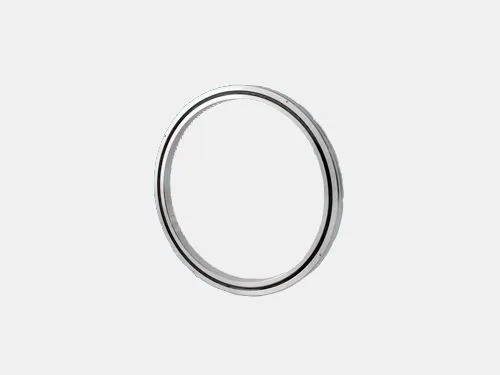
Thin-Walled Crossed Roller Bearings ORE 15025NegotiableMOQ: 5 Pieces

-
Thin-Walled Crossed Roller Bearings ORE 14016NegotiableMOQ: 5 Pieces
-
Thin-Walled Crossed Roller Bearings ORE 2508NegotiableMOQ: 5 Pieces
-
Thin-Walled Crossed Roller Bearings ORE 2008NegotiableMOQ: 5 Pieces
-
OKLDF Thrust Angular Contact Ball Bearings Series OKLDF 150NegotiableMOQ: 5 Pieces
-
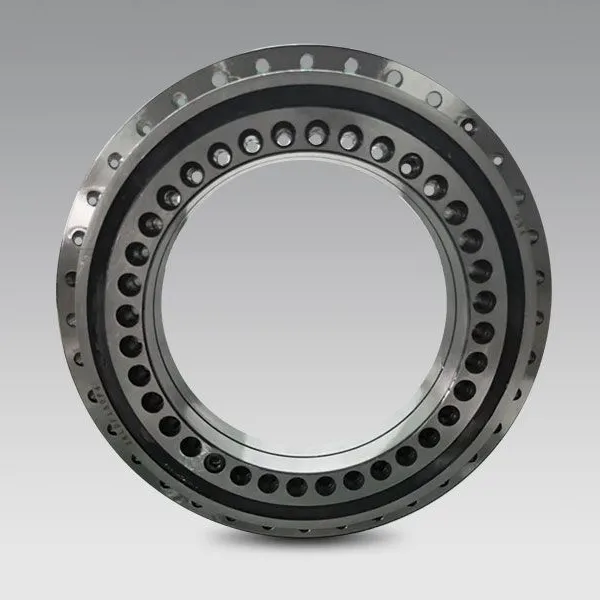
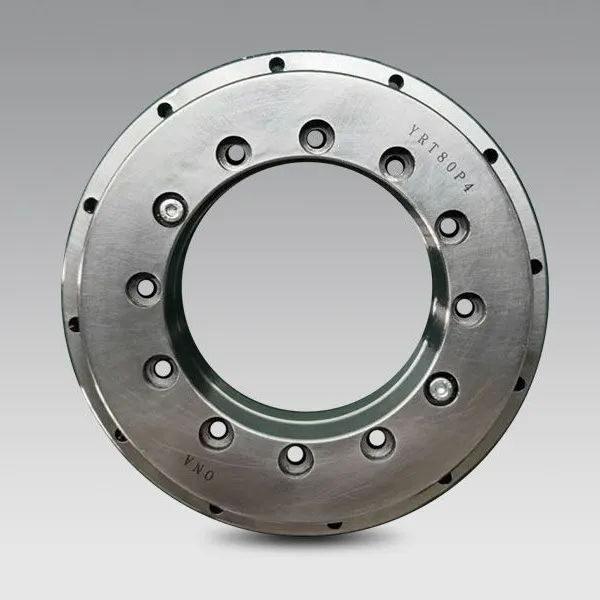
High Precision Rotary Table Bearings ORT 200NegotiableMOQ: 5 Pieces
-
High Precision Rotary Table Bearings ORT 150NegotiableMOQ: 5 Pieces
-
High Precision Rotary Table Bearings ORT 120NegotiableMOQ: 5 Pieces
-
High Precision Rotary Table Bearings ORT 100NegotiableMOQ: 5 Pieces
-
High Precision Rotary Table Bearings ORT 80NegotiableMOQ: 5 Pieces
-
High Precision Rotary Table Bearings ORT 50NegotiableMOQ: 5 Pieces

-
High Precision Rotary Table Bearings ORT 260NegotiableMOQ: 5 Pieces
-
High Precision Rotary Table Bearings ORT 180NegotiableMOQ: 5 Pieces
-
OKLDF Thrust Angular Contact Ball Bearings Series OKLDF 120NegotiableMOQ: 5 Pieces
-
OKLDF Thrust Angular Contact Ball Bearings Series OKLDF 325NegotiableMOQ: 5 Pieces
-
OKLDF Thrust Angular Contact Ball Bearings Series OKLDF 580NegotiableMOQ: 5 Pieces
