

 Business License
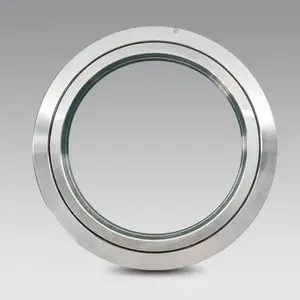
Understanding Bearing Vibration and Noise Standards — What Specifiers Need to Know
In precision equipment applications — from CNC spindles to robotics — bearing vibration and noise directly impact product quality. Understanding the relevant measurement standards helps specifiers select bearings that meet application requirements and verify supplier quality.
The ISO 15242 series provides the globally recognized framework for bearing vibration measurement.
ISO 15242-1 covers fundamental measurement principles — test conditions, apparatus specifications, and calculation methods.
ISO 15242-2 addresses radial ball bearings with cylindrical bore and outside surface.
ISO 15242-3 applies to radial spherical and tapered roller bearings.
ISO 15242-4 covers radial cylindrical roller bearings.
Key measurement parameters include vibration acceleration (peak acceleration, precision ±0.1 m/s²), vibration velocity (RMS velocity, mm/s, referenced to ISO 10816), sound pressure level (A-weighted dB(A) range 20–100 dB, engineering grade per ISO 3746), frequency analysis over 0.2–10 kHz range for bearing-specific anomalies, and axial clearance (mm).
Bearing vibration grades (quality grades) are commonly specified using measurements of vibration velocity and acceleration across low (50–300 Hz), medium (300–1,800 Hz), and high frequency bands (1,800–10 kHz). V1/V2/V3 correspond to ultra-low, low, and standard vibration levels, with V1 representing the highest quality for vibration-sensitive equipment. Lower vibration grades mean smoother operation, which translates to extended equipment life in precision applications.
For noise testing of rolling bearing lubricants, ISO standards ISO 15242-1 to -4 provide test and evaluation methods (NQ series), allowing verification of grease‘s contribution to overall bearing quietness.
What these standards mean for bearing purchasers:
Specifying conformance to ISO 15242 ensures that bearings are tested by consistent, internationally recognized methods.
Vibration data provides a reliable quality benchmark when comparing suppliers.
Matching grade to actual equipment requirements optimizes cost-to-performance.
Low vibration bearings (V1–V2) minimize system noise in medical devices, measurement instruments, and audio/video equipment.
At Luoyang Ouna Bearing, all precision bearings — crossed roller bearings, ORT series rotary table bearings, and four-point contact ball slewing bearings — are manufactured to P5, P4 and P2 precision grades. Contact us to specify your vibration grade requirements; we can provide technical documentation demonstrating compliance with international vibration standards. Request our vibration test data with each shipment for full confidence in your precision bearing sourcing.
Recently Posted
-
Made in Luoyang – China‘s Bearings Have Come of Age. Here‘s Why You Should Take Notice
July 28, 2026For international buyers who have hesitated to source precision bearings from China, the evidence is now overwhelming: China‘s bea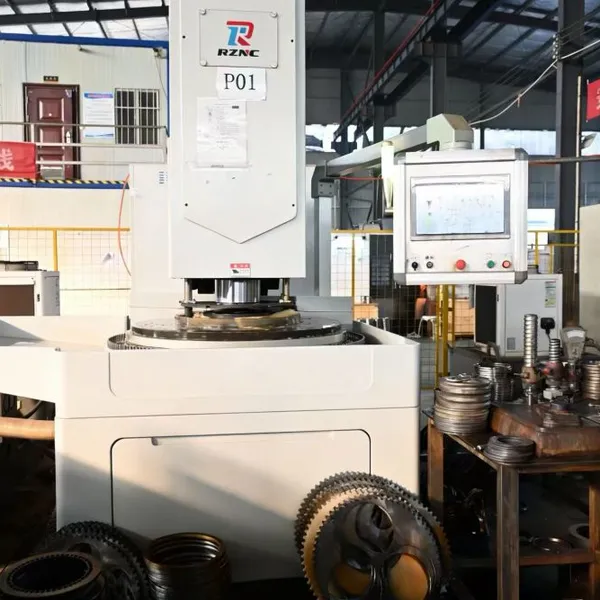 Read More
 -
ORT Series Rotary Table Bearings – The Smart Buyer‘s Choice for High‑Precision CNC Applications
July 28, 2026For CNC machine tool builders, the rotary table bearing is a mission-critical component. Its performance directly determines posit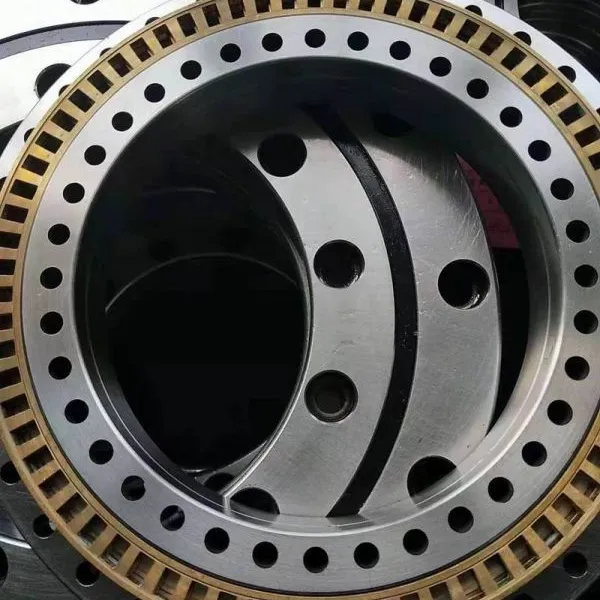 Read More
 -
Seize the Humanoid Robot Boom – The Bearing Market‘s Biggest Growth Opportunity
July 28, 2026The humanoid robot industry is transitioning from research labs to commercial production—and precision bearings are at the center Read More
 -
China’s Bearing Industry Has Come of Age – Here’s Why Global OEMs Are Paying Attention
July 28, 2026If you have historically sourced precision bearings only from traditional European and Japanese manufacturers due to quality conce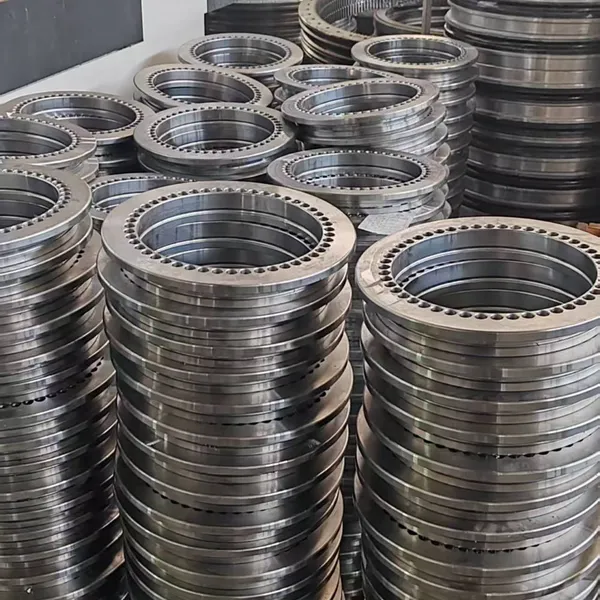 Read More

Contact Us
Recommended Products
-
 Thin-Walled Crossed Roller Bearings ORA 20013NegotiableMOQ: 5 Pieces
 -
Thin-Walled Crossed Roller Bearings ORA 19013NegotiableMOQ: 5 Pieces
-
Thin-Walled Crossed Roller Bearings ORA 6008NegotiableMOQ: 5 Pieces
-
Thin-Walled Crossed Roller Bearings ORA 5008NegotiableMOQ: 5 Pieces
-
Thin-Walled Crossed Roller Bearings ORE 15025NegotiableMOQ: 5 Pieces

-
Thin-Walled Crossed Roller Bearings ORE 14016NegotiableMOQ: 5 Pieces
-
Thin-Walled Crossed Roller Bearings ORE 2508NegotiableMOQ: 5 Pieces
-
Thin-Walled Crossed Roller Bearings ORE 2008NegotiableMOQ: 5 Pieces
-
OKLDF Thrust Angular Contact Ball Bearings Series OKLDF 150NegotiableMOQ: 5 Pieces
-
High Precision Rotary Table Bearings ORT 200NegotiableMOQ: 5 Pieces
-
High Precision Rotary Table Bearings ORT 150NegotiableMOQ: 5 Pieces
-
High Precision Rotary Table Bearings ORT 120NegotiableMOQ: 5 Pieces
-
High Precision Rotary Table Bearings ORT 100NegotiableMOQ: 5 Pieces
-
High Precision Rotary Table Bearings ORT 80NegotiableMOQ: 5 Pieces
-
High Precision Rotary Table Bearings ORT 50NegotiableMOQ: 5 Pieces

-
High Precision Rotary Table Bearings ORT 260NegotiableMOQ: 5 Pieces
-
High Precision Rotary Table Bearings ORT 180NegotiableMOQ: 5 Pieces
-
OKLDF Thrust Angular Contact Ball Bearings Series OKLDF 120NegotiableMOQ: 5 Pieces
-
OKLDF Thrust Angular Contact Ball Bearings Series OKLDF 325NegotiableMOQ: 5 Pieces
-
OKLDF Thrust Angular Contact Ball Bearings Series OKLDF 580NegotiableMOQ: 5 Pieces
