

 Business License
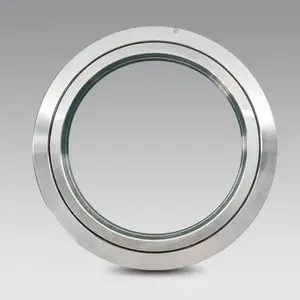
Bearing Mounting and Dismounting – A 10-Point Checklist for Reliable Installation
The effectiveness of a bearing is heavily dependent on how it is installed and removed. Incorrect handling can lead to premature bearing failure, resulting in costly equipment downtime and repairs. Fortunately, most installation-related failures are preventable with proper technique and attention to detail.
Why proper mounting matters
Incorrectly mounted bearings cause misalignment, leading to uneven load distribution, increased friction, and excessive wear. Over time, recurring misalignment causes bearings to overheat, degrade, and ultimately fail prematurely. Brinelling — dents on bearing raceways caused by improper force application — cuts down bearing service life significantly and is further exacerbated by contamination exposure. Even when dismounting bearings, using excessive force or inappropriate tools can result in physical damage to bearing surfaces, seals, or internal components — damage that may look insignificant but has a lasting impact on bearing lifespan.
Conversely, correct handling practices optimize bearing functionality through smooth rotation, minimal friction, and efficient load transfer. They reduce premature failures, extend bearing service life, lower maintenance costs, and create a safer working environment for personnel.
A 10-point checklist for safe bearing mounting
Schaeffler‘s white paper on rolling bearing mounting and dismounting provides a practical 10-point checklist that can help avoid premature bearing failures:
Protect your workspace and the bearing — Keep the work area clean and free from dust, dirt, and moisture before beginning installation.
Use drawings to familiarize yourself with the design — Review the bearing‘s technical specifications and mounting instructions before starting.
Verify bearing specifications — Ensure that your bearing matches the dimensions and tolerances specified on the drawing.
Inspect housing bore and shaft seat — Check for dimensional accuracy, shape and positional accuracy, and cleanliness before proceeding.
Check for potential interference — Ensure that bearing ring mounting is not impaired by edges or sharp corners. A slip angle of 10° to 15° can facilitate smoother installation.
Remove corrosion protection — Wipe off any corrosion protection coating from seat and contact surfaces before mounting.
Apply mounting paste — Apply a very thin, even layer of suitable mounting paste to the cylindrical seating surfaces of the bearing rings.
Do not cool the bearings — Condensation from cooling bearings can lead to corrosion in the bearings and bearing seats, compromising performance.
Apply lubricant after installation — Once mounted, apply a suitable lubricant to the rolling bearings before operation.
Check bearing operation — Verify that the bearing is working properly by rotating the assembled shaft through at least two full revolutions, listening for abnormal noise.
Additional best practices
Beyond the 10-point checklist, proper alignment with shaft and housing ensures even load distribution and smooth operation without risk of friction or overheating. Apply the appropriate type and amount of lubricant — both over-lubrication and under-lubrication can lead to bearing failure. Use recommended torque values when tightening bolts or locknuts.
For dismounting, proper care ensures component reusability. Tools for correct dismounting include mechanical pullers, heating equipment, and hydraulic methods. Force should never be applied through rolling elements when bearings will be reused. When bearing rings are removal only, the ring with rolling element and cage assembly can be removed independently from separable bearings.
How Ouna Bearing supports your installation success
At Luoyang Ouna Bearing Co., Ltd., we believe proper installation is as critical as manufacturing quality. Every shipment includes basic mounting instructions, and our engineering team is available to provide application-specific guidance for complex installations. Our crossed roller bearings, ORT series rotary table bearings, and precision four-point contact ball slewing bearings are designed for straightforward assembly with standard industrial tooling.
Need mounting support for your next installation? Contact our technical team for custom installation guidance, troubleshooting assistance, or to request detailed mounting procedures for specific bearing configurations — we are ready to help you maximize bearing service life through proper installation practices.
Recently Posted
-
Upgrade Your CNC Performance with ORT Series Rotary Table Bearings – A Direct Drop‑In Replacement
June 3, 2026For CNC machine tool builders, the rotary table bearing is a mission‑critical component. Its performance directly determines posit Read More
 -
China’s Bearing Industry Has Come of Age – Here’s Why Global OEMs Are Paying Attention
June 3, 2026If you have historically sourced precision bearings only from traditional European and Japanese manufacturers due to quality conce Read More
 -
Seize the Humanoid Robot Boom – The Bearing Market‘s Biggest Growth Opportunity
June 3, 2026The humanoid robot industry is transitioning from research labs to commercial production—and precision bearings are at the center Read More
 -
ORT Series Rotary Table Bearings – The Smart Buyer‘s Choice for High‑Precision CNC Applications
May 29, 2026For CNC machine tool builders, the rotary table bearing is a mission-critical component. Its performance directly determines posit Read More

Contact Us
Recommended Products
-
 SHF Series Harmonic Drive BearingsNegotiableMOQ: 5 Pieces
 -
Robot Reducer BearingNegotiableMOQ: 5 Pieces
-
Robot Hollow Rotating Platform BearingNegotiableMOQ: 5 Pieces
-
Precision Slewing Bearings OXA 200810NNegotiableMOQ: 5 Pieces
-
OKLDF Thrust Angular Contact Ball Bearings Series OKLDF 100NegotiableMOQ: 5 Pieces
-
SHF Series Harmonic Drive BearingsNegotiableMOQ: 5 Pieces
-
Thin-Walled Crossed Roller Bearings ORB 6013NegotiableMOQ: 5 Pieces
-
Thin-Walled Crossed Roller Bearings ORB 5013NegotiableMOQ: 5 Pieces
-
Thin-Walled Crossed Roller Bearings ORB 4510NegotiableMOQ: 5 Pieces
-
Thin-Walled Crossed Roller Bearings ORB 3010NegotiableMOQ: 5 Pieces
-
Thin-Walled Crossed Roller Bearings ORB 3510NegotiableMOQ: 5 Pieces
-
Thin-Walled Crossed Roller Bearings ORB 2508NegotiableMOQ: 5 Pieces
-
Thin-Walled Crossed Roller Bearings ORB 2008NegotiableMOQ: 5 Pieces
-
Thin-Walled Crossed Roller Bearings ORB 4010NegotiableMOQ: 5 Pieces
-
Thin-Walled Crossed Roller Bearings ORU 445(G)/445(X)NegotiableMOQ: 5 Pieces
-
Thin-Walled Crossed Roller Bearings ORU 297(G)/297(X)NegotiableMOQ: 5 Pieces
-
Thin-Walled Crossed Roller Bearings ORU 228(G)/228(X)NegotiableMOQ: 5 Pieces
-
Thin-Walled Crossed Roller Bearings ORU 178(G)/178(X)NegotiableMOQ: 5 Pieces
-
Thin-Walled Crossed Roller Bearings ORU 148(G)/148(X)NegotiableMOQ: 5 Pieces
-
Thin-Walled Crossed Roller Bearings ORU 124(G)/124(X)NegotiableMOQ: 5 Pieces
