

 Business License
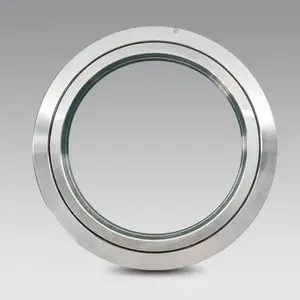
Harmonic Reducer Bearings – The Precision Core of High-Performance Robotics
In the rapidly evolving field of robotics, the harmonic reducer — also known as a strain wave gear — has emerged as a critical component for precision motion control. This compact, high-ratio gear system delivers exceptional torque density and positional accuracy, making it the preferred choice for robot joints, aerospace actuators, and precision positioning equipment. At the heart of every harmonic reducer lies a specialized bearing that must meet extraordinary performance requirements.
What makes harmonic reducer bearings unique
A harmonic reducer consists of three primary components: a wave generator, a flexspline (thin-walled flexible gear), and a circular spline (rigid gear). The bearing arrangement in a harmonic reducer typically includes two distinct bearings: a flexible bearing (thin-section deep groove ball bearing) that accommodates the elliptical deformation of the wave generator, and a rigid crossed roller bearing that supports the output flange.
Of these, the rigid crossed roller bearing used in harmonic reducers is particularly demanding. As one manufacturer specializing in harmonic drive bearings explains, harmonic reducer parts require high machining precision and mounting precision, placing equally high demands on the bearings used. The rigid bearing must provide exceptional rigidity, reliability, and rotational accuracy to ensure consistent torque output and positioning precision over millions of operating cycles.
Structural design and performance advantages
Harmonic reducer crossed roller bearings typically adopt an integral inner and outer ring structure, with cylindrical rollers arranged in a 90° vertical cross within V-shaped raceways. This orthogonal roller arrangement enables the bearing to simultaneously withstand radial force, bidirectional axial force, and overturning moment — all critical capabilities for the output end of a harmonic reducer.
The integrated ring design offers several practical advantages: simplified mounting without complex adjustment procedures, maintained performance stability after installation, and consistently stable rotation accuracy throughout operation. Because the bearing is pre-adjusted for optimal performance, it has minimal impact on final assembly while delivering the precision that robotic applications demand.
Key performance specifications
For demanding harmonic reducer applications, bearings must meet stringent technical criteria:
Precision grade — P4 or P5 (ISO Class 4 or 5), with tighter tolerance control for high-end applications
Vibration level — ZV1, ZV2, or ZV3, depending on noise and smoothness requirements
Internal clearance — C0, C2, or C3, selected based on operating temperature and fit conditions
Material — GCr11 bearing steel is standard across the industry, achieving HRC 60-62 hardness after precision heat treatment
Sealing configuration — Double seals (contact or non-contact) as specified
Applications across robotics sectors
Harmonic reducer bearings are designed specifically for output sections of harmonic reducers, making them indispensable for industrial robot joints (waists, wrists, and other high-precision rotating parts). Beyond industrial robotics, these bearings also serve applications in collaborative robots, medical robotics, semiconductor manufacturing equipment, and precision positioning stages where compact form factors and high torque density are essential.
How Ouna Bearing serves the robotics market
At Luoyang Ouna Bearing Co., Ltd., we manufacture super high-precision crossed roller bearings suitable for harmonic reducer applications, including the rigid output bearing required for all harmonic drive systems. Our product line includes crossed roller bearings across ORA, ORB, ORE, ORU, ORAU, ORBH, OSX, OXSU, OXU, and ORBS series, plus crossed tapered roller bearings JXR and XR series — all available in precision grades P5, P4, and P2 with outer diameters from φ20mm to φ2500mm.
For customers seeking a single-source solution for robotics bearings, our portfolio also includes precision four-point contact ball slewing bearings, high-precision thrust cylindrical roller bearings, and bearings specifically designed for humanoid robot joints. Our engineering team is ready to discuss custom designs for specialized harmonic reducer applications.
Contact us to discuss your harmonic reducer bearing requirements — we are equipped to support robotics manufacturers with reliable, high-precision bearing solutions.
Recently Posted
-
Made in Luoyang – China‘s Bearings Have Come of Age. Here‘s Why You Should Take Notice
July 28, 2026For international buyers who have hesitated to source precision bearings from China, the evidence is now overwhelming: China‘s bea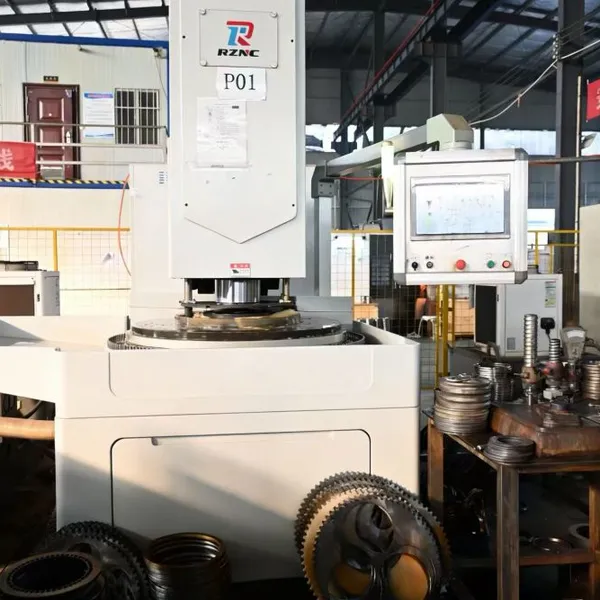 Read More
 -
ORT Series Rotary Table Bearings – The Smart Buyer‘s Choice for High‑Precision CNC Applications
July 28, 2026For CNC machine tool builders, the rotary table bearing is a mission-critical component. Its performance directly determines posit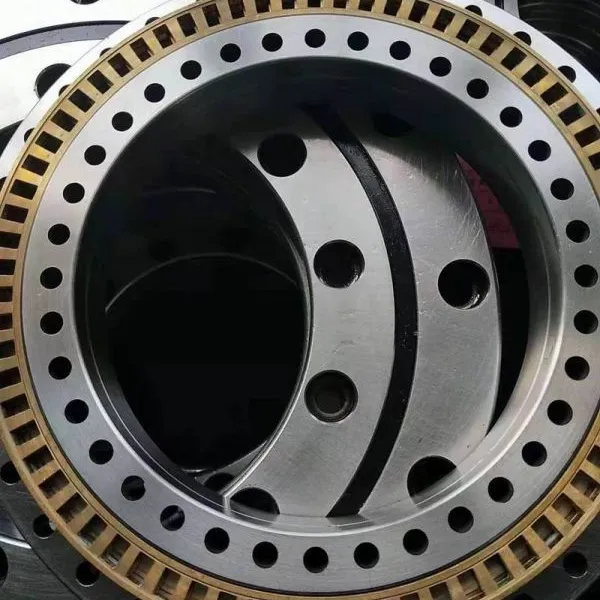 Read More
 -
Seize the Humanoid Robot Boom – The Bearing Market‘s Biggest Growth Opportunity
July 28, 2026The humanoid robot industry is transitioning from research labs to commercial production—and precision bearings are at the center Read More
 -
China’s Bearing Industry Has Come of Age – Here’s Why Global OEMs Are Paying Attention
July 28, 2026If you have historically sourced precision bearings only from traditional European and Japanese manufacturers due to quality conce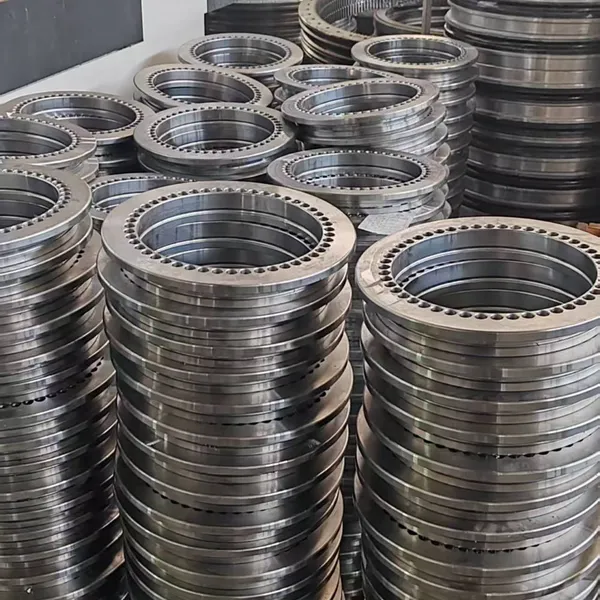 Read More

Contact Us
Recommended Products
-
 Thin-Walled Crossed Roller Bearings ORA 20013NegotiableMOQ: 5 Pieces
 -
Thin-Walled Crossed Roller Bearings ORA 19013NegotiableMOQ: 5 Pieces
-
Thin-Walled Crossed Roller Bearings ORA 6008NegotiableMOQ: 5 Pieces
-
Thin-Walled Crossed Roller Bearings ORA 5008NegotiableMOQ: 5 Pieces
-
Thin-Walled Crossed Roller Bearings ORE 15025NegotiableMOQ: 5 Pieces

-
Thin-Walled Crossed Roller Bearings ORE 14016NegotiableMOQ: 5 Pieces
-
Thin-Walled Crossed Roller Bearings ORE 2508NegotiableMOQ: 5 Pieces
-
Thin-Walled Crossed Roller Bearings ORE 2008NegotiableMOQ: 5 Pieces
-
OKLDF Thrust Angular Contact Ball Bearings Series OKLDF 150NegotiableMOQ: 5 Pieces
-
High Precision Rotary Table Bearings ORT 200NegotiableMOQ: 5 Pieces
-
High Precision Rotary Table Bearings ORT 150NegotiableMOQ: 5 Pieces
-
High Precision Rotary Table Bearings ORT 120NegotiableMOQ: 5 Pieces
-
High Precision Rotary Table Bearings ORT 100NegotiableMOQ: 5 Pieces
-
High Precision Rotary Table Bearings ORT 80NegotiableMOQ: 5 Pieces
-
High Precision Rotary Table Bearings ORT 50NegotiableMOQ: 5 Pieces

-
High Precision Rotary Table Bearings ORT 260NegotiableMOQ: 5 Pieces
-
High Precision Rotary Table Bearings ORT 180NegotiableMOQ: 5 Pieces
-
OKLDF Thrust Angular Contact Ball Bearings Series OKLDF 120NegotiableMOQ: 5 Pieces
-
OKLDF Thrust Angular Contact Ball Bearings Series OKLDF 325NegotiableMOQ: 5 Pieces
-
OKLDF Thrust Angular Contact Ball Bearings Series OKLDF 580NegotiableMOQ: 5 Pieces
