

 Business License
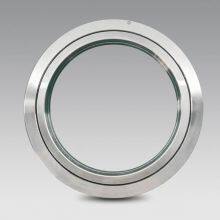
The Design Secret — How Ultra-Thin Crossed Roller Bearings Achieve High Rigidity
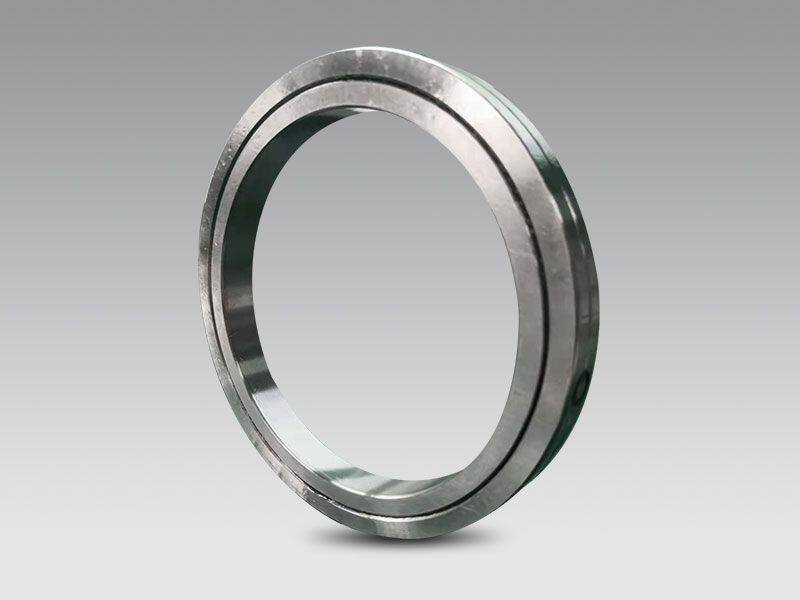
Crossed roller bearings are recognized as the optimal solution for applications requiring high rotational accuracy and rigidity in limited spaces. But what makes their ultra-thin design possible without compromising structural integrity?
The principle of orthogonal roller arrangement
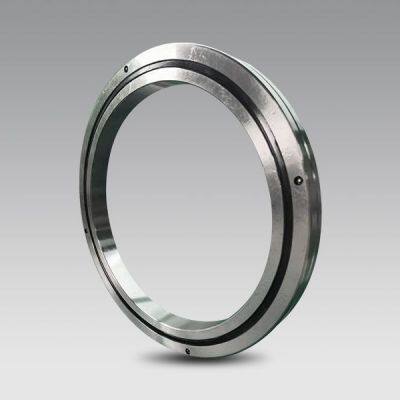
Unlike conventional ball bearings that rely on point contact, crossed roller bearings feature cylindrical rollers arranged alternately at right angles within V-shaped raceways. This geometry generates line contact between the rollers and raceways, distributing loads across a larger contact area. The orthogonal arrangement means rollers oriented in one direction carry radial and axial loads from one angle, while perpendicular rollers handle loads from other directions, achieving balanced load distribution in a single unit.
Overcoming the rigidity-thickness trade-off
The XY line contact pattern enables an exceptionally high rigidity-to-thickness ratio. When preload is applied during assembly, the contact between rollers and raceways becomes even more intimate, eliminating internal clearance and creating a pre-stressed condition that enhances initial stiffness under load. Consequently, these bearings can achieve rigidity levels comparable to significantly larger conventional designs.
Material and processing requirements
Achieving this precision demands advanced processing capabilities. High-carbon chromium bearing steel (GCr15) is the universal base material, heat-treated to HRC 60-62 hardness. The V-shaped raceways must be ground to nanometer-level profile accuracy, with matched surface roughness, and rollers must be sorted within sub-micron diameter tolerances to ensure uniform load distribution.
Design variants for different applications
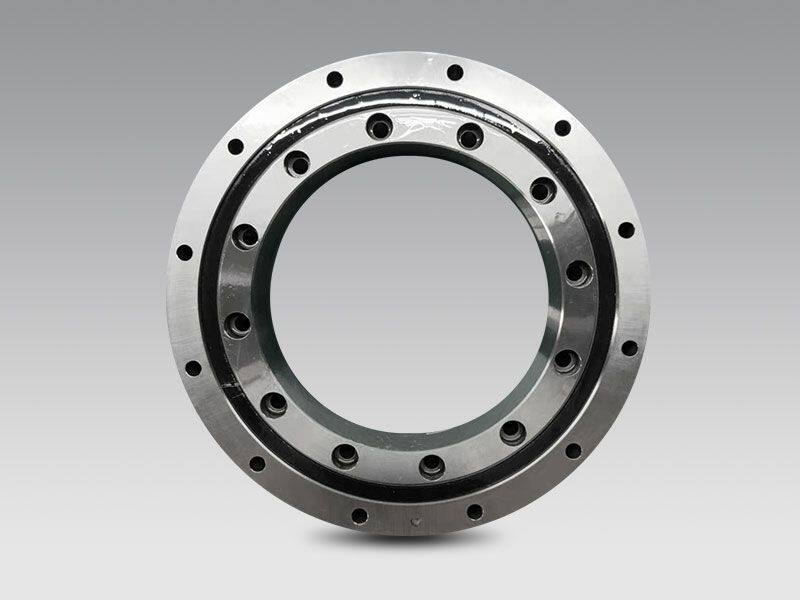
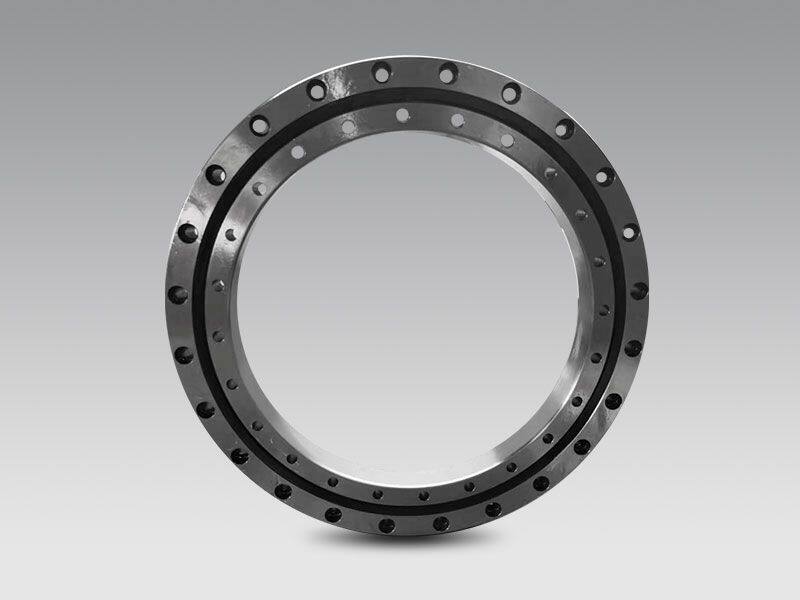
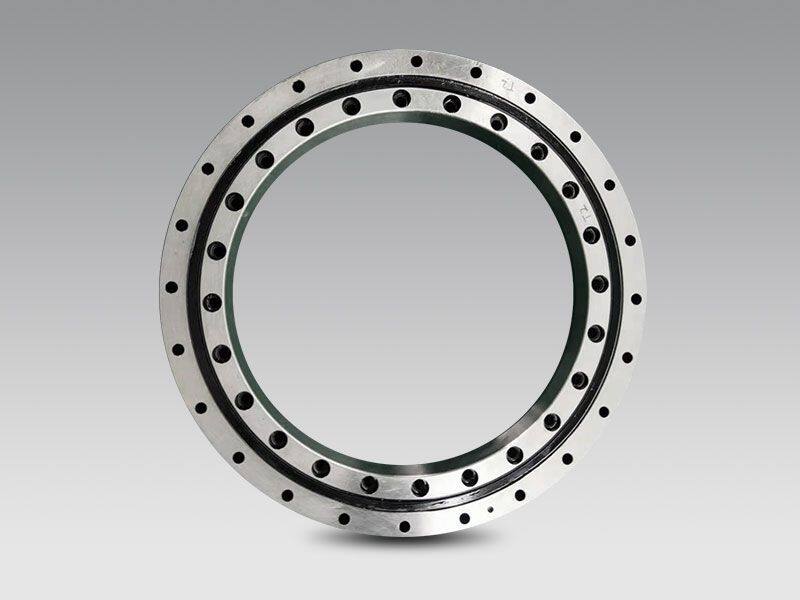
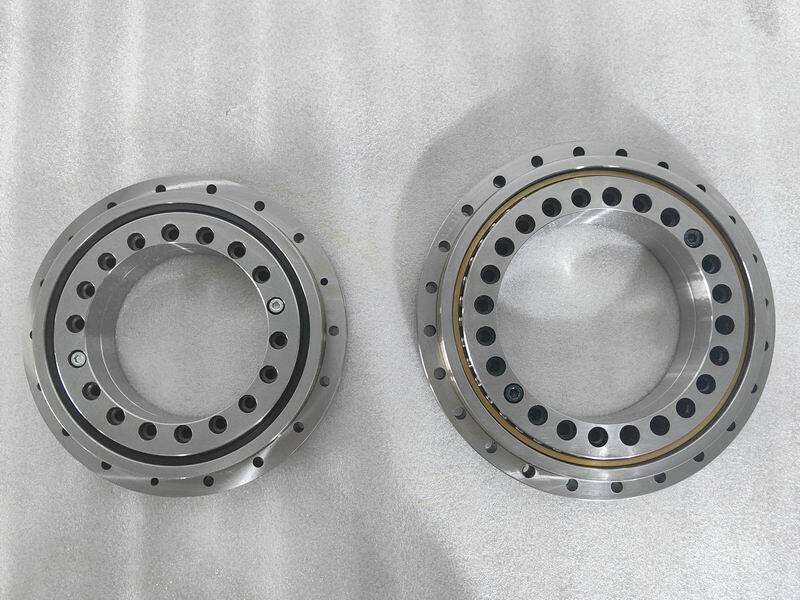
According to specific structural requirements, manufacturers have developed multiple configurations. The SX series features an ultra-thin design requiring flange and support seat fixation for inner ring rotation applications. The XU series has integrated inner and outer rings with pre-drilled mounting holes, eliminating the need for additional flanges or seats—ideal for both inner and outer ring rotation where performance stability under dynamic loading is critical. The OXSU series pushes ultra-thin design to its physical limits while maintaining full load capacity through precision control at every manufacturing stage.
From design secret to proven solution
Understanding the engineering behind ultra-thin crossed roller bearings helps equipment designers make informed decisions. The core principle is simple: orthogonal roller arrangement plus line contact plus precision manufacturing equals high rigidity in minimal cross-section. Our engineering team provides design guidance for custom ultra-thin bearing configurations, optimizing the efficiency of your space-constrained mechanical systems.
Recently Posted
-
What the Latest Export Data Tells You — Increasingly Competitive Precision Bearings from China
May 18, 2026For international buyers evaluating potential suppliers, macroeconomic data matters. When it comes to China‘s bearing industry, th Read More
 -
ORT Rotary Table Bearings — The Precision Heart of Advanced CNC Machinery
May 18, 2026CNC machine tool performance ultimately depends on rotary table precision. At the center of high-performance rotary tables stands Read More
 -
Seizing the Humanoid Robot Opportunity — The Bearing Market’s Next Growth Engine
May 18, 2026The humanoid robot industry is rapidly transitioning from laboratories to production lines—and precision bearings are at the core Read More
 -
From Supplier to Partner — Why Leading Global Manufacturers Choose Luoyang Ouna Bearing
May 13, 2026In the precision bearing industry, finding a supplier is easy. Finding a trusted partner—one with proven expertise, internati Read More

Contact Us
Recommended Products
-
 OKLDF Thrust Angular Contact Ball Bearings Series OKLDF 120NegotiableMOQ: 5 Pieces
 -
OKLDF Thrust Angular Contact Ball Bearings Series OKLDF 325NegotiableMOQ: 5 Pieces
-
OKLDF Thrust Angular Contact Ball Bearings Series OKLDF 580NegotiableMOQ: 5 Pieces
-
OKLDF Thrust Angular Contact Ball Bearings Series OKLDF 650NegotiableMOQ: 5 Pieces
-
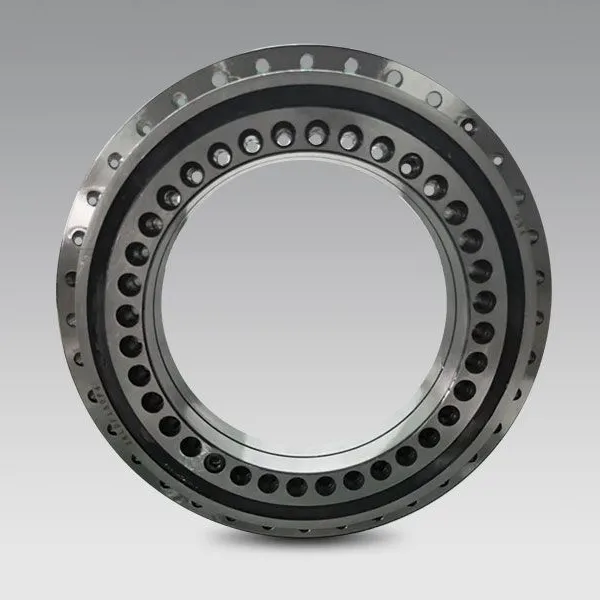
OKLDF Thrust Angular Contact Ball Bearings Series OKLDF 460NegotiableMOQ: 5 Pieces
-
OKLDF Thrust Angular Contact Ball Bearings Series OKLDF 395NegotiableMOQ: 5 Pieces
-
OKLDF Thrust Angular Contact Ball Bearings Series OKLDF 200NegotiableMOQ: 5 Pieces
-
OKLDF Thrust Angular Contact Ball Bearings Series OKLDF 260NegotiableMOQ: 5 Pieces
-
SHF Series Harmonic Drive BearingsNegotiableMOQ: 5 Pieces
-
Robot Reducer BearingNegotiableMOQ: 5 Pieces
-
Robot Hollow Rotating Platform BearingNegotiableMOQ: 5 Pieces
-
Precision Slewing Bearings OXA 200810NNegotiableMOQ: 5 Pieces
-
OKLDF Thrust Angular Contact Ball Bearings Series OKLDF 100NegotiableMOQ: 5 Pieces
-
SHF Series Harmonic Drive BearingsNegotiableMOQ: 5 Pieces
-
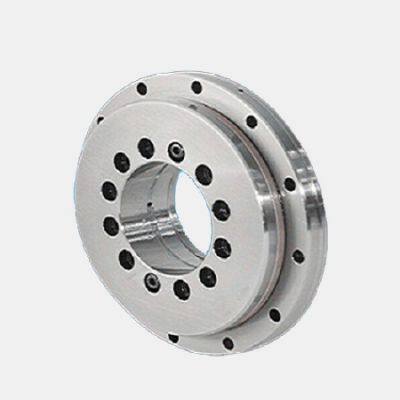
Thin-Walled Crossed Roller Bearings ORB 6013NegotiableMOQ: 5 Pieces
-
Thin-Walled Crossed Roller Bearings ORB 5013NegotiableMOQ: 5 Pieces
-
Thin-Walled Crossed Roller Bearings ORB 4510NegotiableMOQ: 5 Pieces
-
Thin-Walled Crossed Roller Bearings ORB 3010NegotiableMOQ: 5 Pieces
-
Thin-Walled Crossed Roller Bearings ORB 3510NegotiableMOQ: 5 Pieces
-
Thin-Walled Crossed Roller Bearings ORB 2508NegotiableMOQ: 5 Pieces
