

 Business License
Bearing Opportunities in the Humanoid Robot Wave
From 2025 to 2026, humanoid robots are undoubtedly one of the hottest keywords in China's manufacturing industry. From humanoid robots doing "backflips" on Spring Festival galas to smart manufacturing devices replacing manual labor in factory workshops, humanoid robots are accelerating from labs to industrialization. And in this "joint" revolution, bearings play a crucial role.
How many bearings does a humanoid robot need?
The structure of a humanoid robot is highly complex. From the head to the ankle, every joint movement relies on bearing support. Taking Tesla's Optimus humanoid robot as an example, the types of bearings required are diverse:
Harmonic reducers typically use one crossed roller bearing and one flexible bearing.
Ball screws use angular contact ball bearings on the fixed side and deep groove ball bearings on the support side.
Motors often use ball bearings, roller bearings, and tapered roller bearings.
Hollow cup motors in dexterous hands mostly use ball bearings and plain bearings.
If Tesla's humanoid robot shipments reach 1 million units, the additional bearing demand alone is expected to exceed 3 billion RMB. Considering that many humanoid robot manufacturers such as Zhiyuan, Xiaomi, Figure and others are accelerating product iteration, the total bearing demand in the industry is extremely promising.
Crossed roller bearings: The "standard" for humanoid robot rotational joints
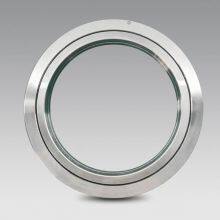
Among the many bearing types used in humanoid robots, crossed roller bearings play the most central role. Whether it's the output end of a harmonic reducer in a rotational joint or a planetary roller screw in a linear joint, these are typical precision components.
Why are crossed roller bearings so critical? The reason lies in their unique structural characteristics: the cross-arrangement of rollers enables them to simultaneously bear radial, axial and overturning moment loads. This is an ideal solution for robot joints that require frequent start-stops, precise positioning, and multi-directional loading.
Bearings for harmonic reducers: Another key category
In addition to crossed roller bearings, harmonic reducers are also core transmission components in humanoid robots. Luoyang Ouna Bearing has long produced dedicated bearings for harmonic reducers, which are widely used in harmonic drives and industrial robots.
A harmonic reducer typically requires both a crossed roller bearing and a flexible bearing, working together to achieve high-precision, high-rigidity motion output. With the large-scale development of the humanoid robot industry, the demand for harmonic reducer bearings will continue to rise.
Opportunity for Chinese companies: Significant room for import substitution
At present, high-end bearings and high-end bearing processing equipment are still relatively dependent on imports, leaving substantial room for domestic substitution. In the field of humanoid robot bearings, Chinese companies have already begun active deployment. Some companies plan to build production lines with an annual capacity of 100,000 sets of ball screws and planetary roller screws for humanoid robots by 2025, and increase the production capacity of robot-specific bearings such as miniature tapered roller bearings and crossed roller bearings to 1.2 million sets by 2026.
More notably, China's robot industry chain is rapidly becoming independently controllable. Data shows that China's robot industry chain is almost 100% domestically controllable. Leading reducer manufacturer Leaderdrive and bearing manufacturer Hongyuan Bearing have become representative companies focusing on core component technological innovation.
Ouna Bearing's humanoid robot bearing solutions
Luoyang Ouna Bearing Co., Ltd. began R&D and production of precision bearings for robots many years ago. The company currently offers the following robot-related bearing products:
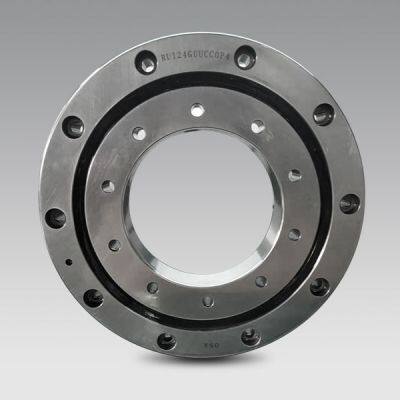
Thin-walled crossed roller bearings (ORA, ORB, ORE, ORU series, etc.)
Bearings for harmonic reducers
Bearings for humanoid robots
High-precision rotary table bearings
Precision four-point contact ball bearings
These products are widely used in industrial robots, humanoid robots, automation equipment, harmonic reducers and other fields, with precision grades covering P5, P4 and P2, and an outer diameter range from φ20mm to φ2500mm.
Conclusion
The humanoid robot industry is on the verge of large-scale takeoff. As a core component supplier, Ouna Bearing will continue to invest in the R&D and manufacturing of precision bearings for robots, working with upstream and downstream partners to jointly embrace the "joint" revolution in this hundred-billion-yuan track.
If you are looking for a reliable precision bearing supplier for your humanoid robot project, please contact us for technical discussions or sample testing.
Recently Posted
-
Ultra-Thin Crossed Roller Bearings — Compact Precision for Space-Constrained Applications
May 9, 2026In precision equipment design, space is often the limiting factor. Ultra-thin crossed roller bearings provide a solution—deliverin Read More
 -
ORT Series Rotary Table Bearings — Precision and Versatility for Advanced Machinery
May 9, 2026The rotary table bearing is fundamental to CNC performance, and our ORT series represents a comprehensive solution for demanding a Read More
 -
Crossed Roller Bearings in Industrial Robotics — Powering the Automation Revolution
May 9, 2026Industrial robotics is one of the fastest-growing application segments for crossed roller bearings, and the numbers speak for them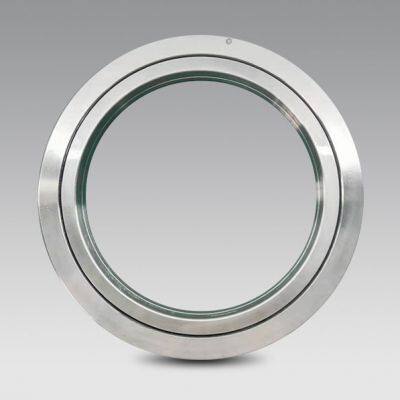 Read More
 -
Innovations in Bearing Monitoring — From Traditional Inspection to Smart Maintenance
May 9, 2026Modern industrial operations demand more than just reliable bearings—they require intelligence. As factories adopt predictive main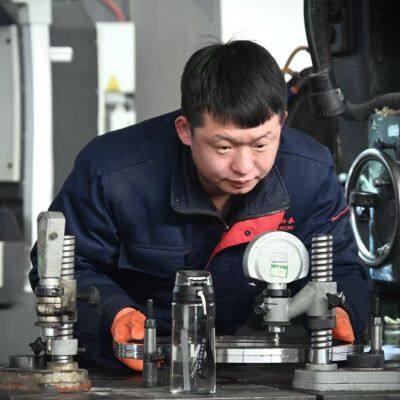 Read More

Contact Us
Recommended Products
-
 SHF Series Harmonic Drive BearingsNegotiableMOQ: 5 Pieces
 -
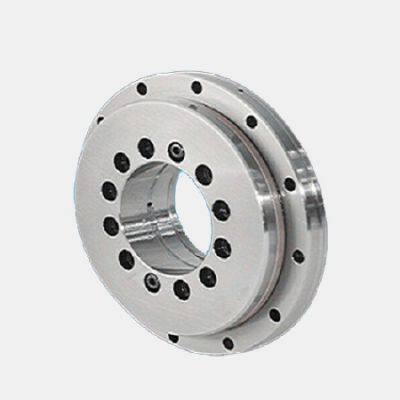
Robot Reducer BearingNegotiableMOQ: 5 Pieces
-
Robot Hollow Rotating Platform BearingNegotiableMOQ: 5 Pieces
-
Precision Slewing Bearings OXA 200810NNegotiableMOQ: 5 Pieces
-
OKLDF Thrust Angular Contact Ball Bearings Series OKLDF 100NegotiableMOQ: 5 Pieces
-
SHF Series Harmonic Drive BearingsNegotiableMOQ: 5 Pieces
-
Thin-Walled Crossed Roller Bearings ORB 6013NegotiableMOQ: 5 Pieces
-
Thin-Walled Crossed Roller Bearings ORB 5013NegotiableMOQ: 5 Pieces
-
Thin-Walled Crossed Roller Bearings ORB 4510NegotiableMOQ: 5 Pieces
-
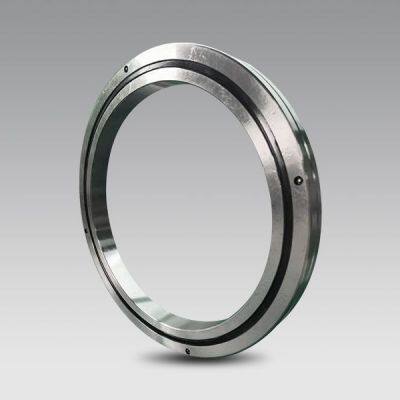
Thin-Walled Crossed Roller Bearings ORB 3010NegotiableMOQ: 5 Pieces
-
Thin-Walled Crossed Roller Bearings ORB 3510NegotiableMOQ: 5 Pieces
-
Thin-Walled Crossed Roller Bearings ORB 2508NegotiableMOQ: 5 Pieces
-
Thin-Walled Crossed Roller Bearings ORB 2008NegotiableMOQ: 5 Pieces
-
Thin-Walled Crossed Roller Bearings ORB 4010NegotiableMOQ: 5 Pieces
-
Thin-Walled Crossed Roller Bearings ORU 445(G)/445(X)NegotiableMOQ: 5 Pieces
-
Thin-Walled Crossed Roller Bearings ORU 297(G)/297(X)NegotiableMOQ: 5 Pieces
-
Thin-Walled Crossed Roller Bearings ORU 228(G)/228(X)NegotiableMOQ: 5 Pieces
-
Thin-Walled Crossed Roller Bearings ORU 178(G)/178(X)NegotiableMOQ: 5 Pieces
-
Thin-Walled Crossed Roller Bearings ORU 148(G)/148(X)NegotiableMOQ: 5 Pieces
-
Thin-Walled Crossed Roller Bearings ORU 124(G)/124(X)NegotiableMOQ: 5 Pieces
