

 Business License
Crossed Roller Bearings Deep Dive Why Are They Called the Invisible Backbone of Precision Equipment
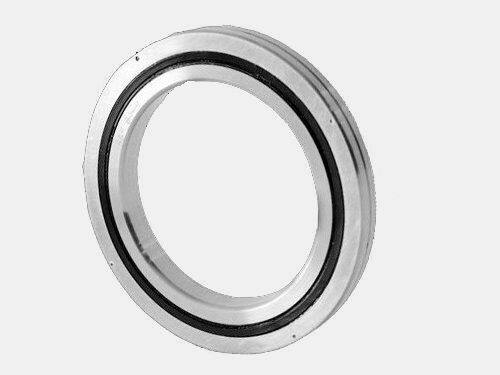
In the high-end equipment manufacturing field, there is a type of bearing that, although small in size, bears the rotational accuracy and rigidity of the entire equipment. It is widely used in the joints of industrial robots, the rotary tables of 5-axis machining centers, the core support structures of DD motors – it is the crossed roller bearing. Today, we will analyze this key component known as the "invisible backbone" of precision equipment.
What is a crossed roller bearing?
As the name suggests, the core feature of a crossed roller bearing lies in the arrangement of the rollers – two sets of raceways and rollers arranged at right angles to each other, with adjacent rollers oriented oppositely and separated by spacers. This unique structure gives crossed roller bearings three significant advantages:
Advantage 1: One bearing, multiple load directions
Traditional bearings typically can only bear loads mainly in one direction. Because the rollers in a crossed roller bearing are arranged at 90° to each other, it can simultaneously bear radial loads, axial loads and overturning moment loads. This means that in rotating components requiring complex loading, one crossed roller bearing can replace multiple bearings, greatly simplifying the equipment structure.
Advantage 2: High rigidity, thin design
Compared with traditional bearings, crossed roller bearings achieve a thin design while greatly improving rigidity. For example, in DD motors, crossed roller bearings are typically used to bear radial, axial and moment loads simultaneously, achieving a thin design and high rigidity compared to double-row angular contact ball bearings. In addition, because the bearing structure allows clearance adjustment, preload can be applied to obtain high rotational accuracy.
Advantage 3: Micron-level rotational accuracy
In precision machine tools and robot joints, rotational accuracy is a core indicator of equipment performance. A well-known machine tool brand used customized crossed roller bearings on the core rotary axis of its 5-axis machining center. While withstanding high-speed cutting forces, radial and axial runout was controlled within 2 microns – a 40% improvement in accuracy compared to traditional ball bearings. Actual measurement data shows that after 2,000 hours of continuous machining, the dimensional error of key components remained stable within ±3 microns.
Main applications of crossed roller bearings
Industrial robot joints – This is one of the most core application scenarios. Whether it's the waist, shoulder or elbow joints of industrial robots, or the output end of harmonic reducers, high-rigidity, high-precision crossed roller bearings are needed to ensure the accuracy and stability of robot motion. According to market research, the demand for crossed roller bearings in robotics and automation accounts for nearly 42%.
CNC machine tool rotary tables – The rotary tables of 4-axis and 5-axis machining centers need to withstand complex cutting forces and frequent start-stop actions. The high rigidity and high precision of crossed roller bearings perfectly match this demand. It is estimated that the demand for crossed roller bearings in machine tool applications accounts for about 36%.
DD motors and direct drive motors – The structure of a DD motor includes four major units: stator, rotor, bearing and encoder. Crossed roller bearings are typically used to ensure high rigidity, backlash-free precision drive performance.
Semiconductor manufacturing equipment and medical imaging equipment – High-precision crossed roller rings are widely used in semiconductor manufacturing equipment and medical imaging equipment. Their structure can simultaneously bear radial, axial and overturning moment loads, ensuring high precision in positioning and motion control.
Humanoid robots – This is one of the most promising emerging application areas for crossed roller bearings. Humanoid robots require a large number of crossed roller bearings for their rotational joints, especially at the output end of harmonic reducers.
Market Outlook
In 2025, the global crossed roller bearing market size was US$592 million, and is expected to grow to US$955 million by 2035, with a compound annual growth rate (CAGR) of 4.9%. The adoption rate of high-precision bearings has exceeded 54%. Meanwhile, the global robot bearing market revenue in 2024 was approximately 70.96 billion RMB, and is expected to approach 125.06 billion RMB by 2031, with a CAGR of 8.4%.
Ouna Bearing's Crossed Roller Bearing Products
Luoyang Ouna Bearing Co., Ltd. offers a full range of crossed roller bearing products, covering ORA, ORB, ORE, ORU, ORAU, ORBH, OSX, OXSU, OXU, ORBS series, as well as crossed tapered roller bearings JXR and XR series. Precision grades reach P5, P4 and P2, covering outer diameters from φ20mm to φ2500mm. We not only supply standard models but also develop custom sizes and preload specifications according to customer drawings.
Conclusion
Although crossed roller bearings are low-profile, they are an indispensable "invisible backbone" of high-end precision equipment. Whether it's a 5-axis machining center being upgraded or a humanoid robot poised for mass production, these key components are essential.
If you are looking for high-quality crossed roller bearings for your equipment, please contact us for technical information or sample support.

Recently Posted
-
Ultra-Thin Crossed Roller Bearings — Compact Precision for Space-Constrained Applications
May 9, 2026In precision equipment design, space is often the limiting factor. Ultra-thin crossed roller bearings provide a solution—deliverin Read More
 -
ORT Series Rotary Table Bearings — Precision and Versatility for Advanced Machinery
May 9, 2026The rotary table bearing is fundamental to CNC performance, and our ORT series represents a comprehensive solution for demanding a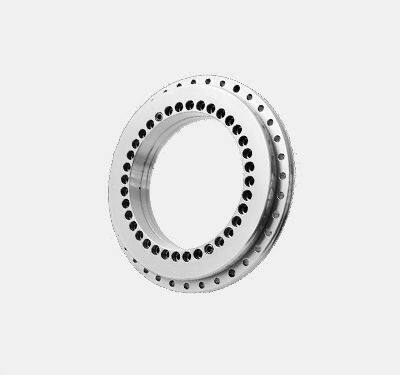 Read More
 -
Crossed Roller Bearings in Industrial Robotics — Powering the Automation Revolution
May 9, 2026Industrial robotics is one of the fastest-growing application segments for crossed roller bearings, and the numbers speak for them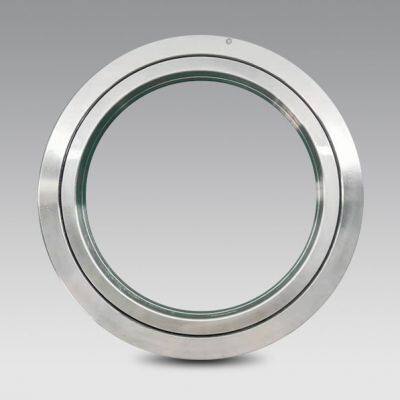 Read More
 -
Innovations in Bearing Monitoring — From Traditional Inspection to Smart Maintenance
May 9, 2026Modern industrial operations demand more than just reliable bearings—they require intelligence. As factories adopt predictive main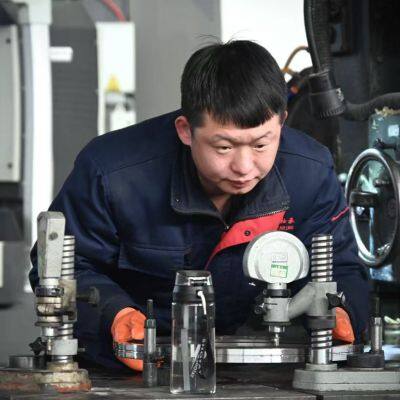 Read More

Contact Us
Recommended Products
-
 Thin-Walled Crossed Roller Bearings ORB 6013NegotiableMOQ: 5 Pieces
 -
Thin-Walled Crossed Roller Bearings ORB 5013NegotiableMOQ: 5 Pieces
-
Thin-Walled Crossed Roller Bearings ORB 4510NegotiableMOQ: 5 Pieces
-
Thin-Walled Crossed Roller Bearings ORB 3010NegotiableMOQ: 5 Pieces
-
Thin-Walled Crossed Roller Bearings ORB 3510NegotiableMOQ: 5 Pieces
-
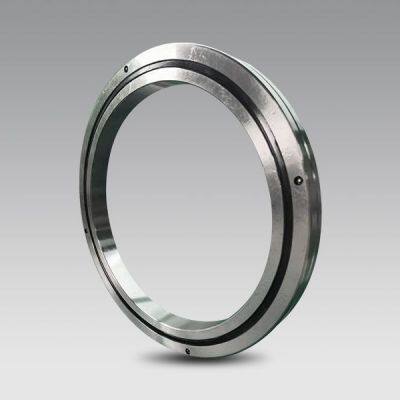
Thin-Walled Crossed Roller Bearings ORB 2508NegotiableMOQ: 5 Pieces
-
Thin-Walled Crossed Roller Bearings ORB 2008NegotiableMOQ: 5 Pieces
-
Thin-Walled Crossed Roller Bearings ORB 4010NegotiableMOQ: 5 Pieces
-
Thin-Walled Crossed Roller Bearings ORU 445(G)/445(X)NegotiableMOQ: 5 Pieces
-
Thin-Walled Crossed Roller Bearings ORU 297(G)/297(X)NegotiableMOQ: 5 Pieces
-
Thin-Walled Crossed Roller Bearings ORU 228(G)/228(X)NegotiableMOQ: 5 Pieces
-
Thin-Walled Crossed Roller Bearings ORU 178(G)/178(X)NegotiableMOQ: 5 Pieces
-
Thin-Walled Crossed Roller Bearings ORU 148(G)/148(X)NegotiableMOQ: 5 Pieces
-
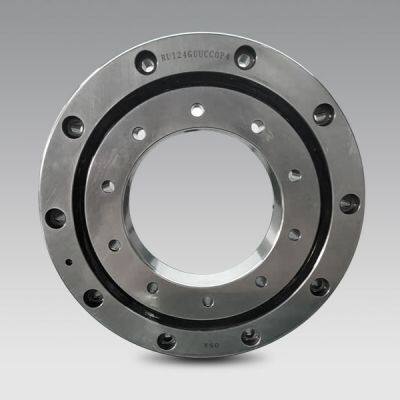
Thin-Walled Crossed Roller Bearings ORU 124(G)/124(X)NegotiableMOQ: 5 Pieces
-
Thin-Walled Crossed Roller Bearings ORU 66NegotiableMOQ: 5 Pieces
-
Thin-Walled Crossed Roller Bearings ORU 85(G)/85(X)NegotiableMOQ: 5 Pieces
-
Thin-Walled Crossed Roller Bearings ORU 57NegotiableMOQ: 5 Pieces
-
Thin-Walled Crossed Roller Bearings ORU 42NegotiableMOQ: 5 Pieces
-
Thin-Walled Crossed Roller Bearings ORU 28NegotiableMOQ: 5 Pieces
-
Thin-Walled Crossed Roller Bearings ORBH 6013 ANegotiableMOQ: 5 Pieces
