

 Business License
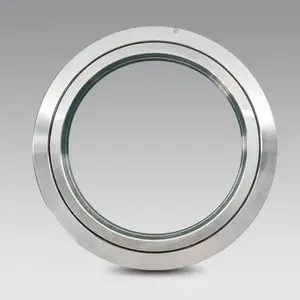
Crossed Roller Bearings vs. Other Bearing Types — A Comprehensive Selection Guide for Engineers
Selecting the right bearing for a precision motion application can be challenging. Different bearing types offer different trade-offs in load capacity, rigidity, speed capability, and installation complexity.
Below is a comparison of four common precision bearing types used in industrial equipment.
Deep Groove Ball Bearings are the most widely used bearing type, suitable primarily for radial loads and moderate axial loads. Their advantages include lower cost, the ability to handle axial or radial loads, suitability for high-speed applications, and a wide variety of sizes. However, their load capacity is the lowest among roller-bearing types, with relatively lower stiffness and limited axial load capacity in one direction.
Angular Contact Ball Bearings are designed to handle both radial and axial loads (combined loads), with high axial load capacity in a single direction. They are particularly suited for high-speed applications and can be paired or even combined for high running accuracy. Their contact angle must be aligned to the intended load direction, and they need to be used in pairs or sets unless the load direction is constant.
Tapered Roller Bearings can handle large radial and thrust loads due to their tapered inner and outer ring raceways and tapered rollers. They provide extremely high radial load capacity among roller bearings—second only to spherical roller bearings. However, their limiting speed is typically about 65% of similarly sized ball bearings, they require precise adjustment of axial clearance, and heat generation is higher at high speeds.
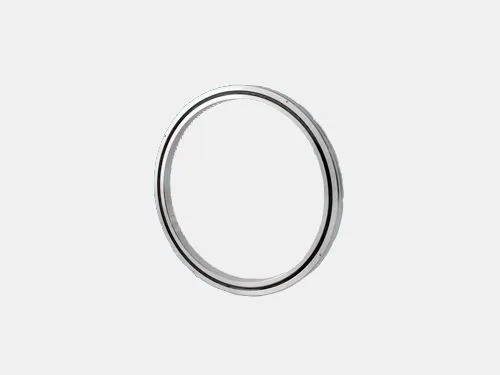
Crossed Roller Bearings feature rollers arranged in a crossed pattern to simultaneously handle radial, axial, and moment loads in a single, compact unit. They offer extremely high rigidity in a thin profile (high stiffness-to-thickness ratio), excellent rotation accuracy and low runout (micron-level precision), and good suitability for medium speeds with proper lubrication. They are more expensive than standard ball bearings and have a more complex manufacturing process.
Summary recommendations:
MM design: Deep groove ball bearings (for pure radial loads, medium speeds)
MM design: Angular contact ball bearings (for combined loads, high-speed spindles)
MM design: Crossed roller bearings (for moment loads, limited space, robotic joints, rotary tables)
MM design: Tapered roller bearings (for heavy combined loads, lower speeds)
Why leading design teams choose Crossed Roller Bearings
In robot joint applications, both axial/radial loads and moment loads are often present. A crossed roller bearing can take all three simultaneously within a single row of rollers, replacing more complex bearing arrangements. Additionally, the roller-on-race line contact results in significantly higher rigidity than the point contact of ball bearings, maintaining accuracy even under loading. The ultra-thin cross-section also allows design engineers to create more compact, lighter-weight equipment by optimizing packaging within the same envelope size.
At Luoyang Ouna Bearing, we offer the full spectrum of crossed roller bearings (ORA, ORB, ORE, ORU, ORAU, ORBH series, plus crossed tapered roller bearings JXR and XR series), all available in precision grades P5, P4 and P2 with outer diameters from φ20mm to φ2500mm. Our engineering team provides application-specific selection support for your design requirements. Contact us with your application parameters, and we‘ll help select the optimal bearing type and configuration — backed by customizable options tailored to your specific design challenges.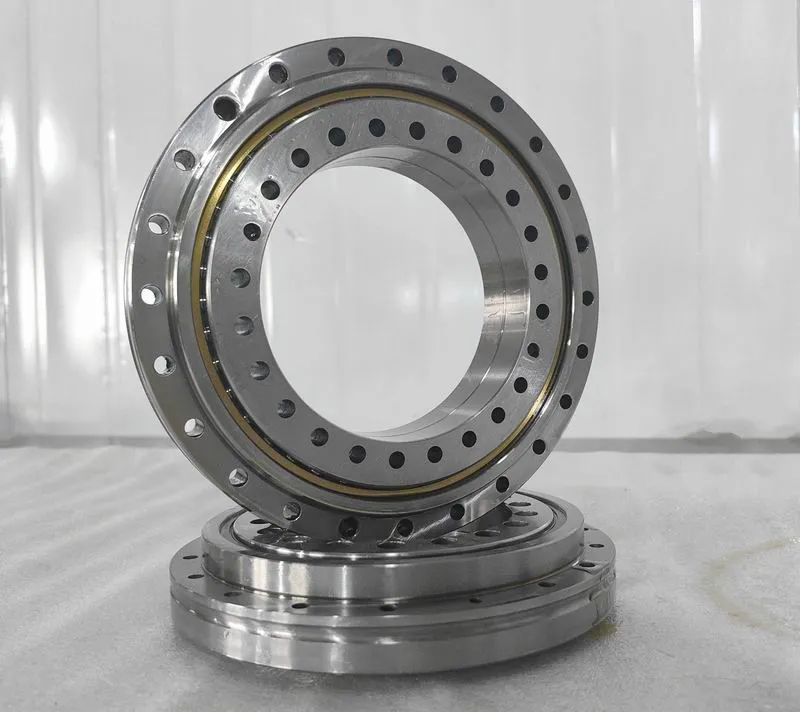
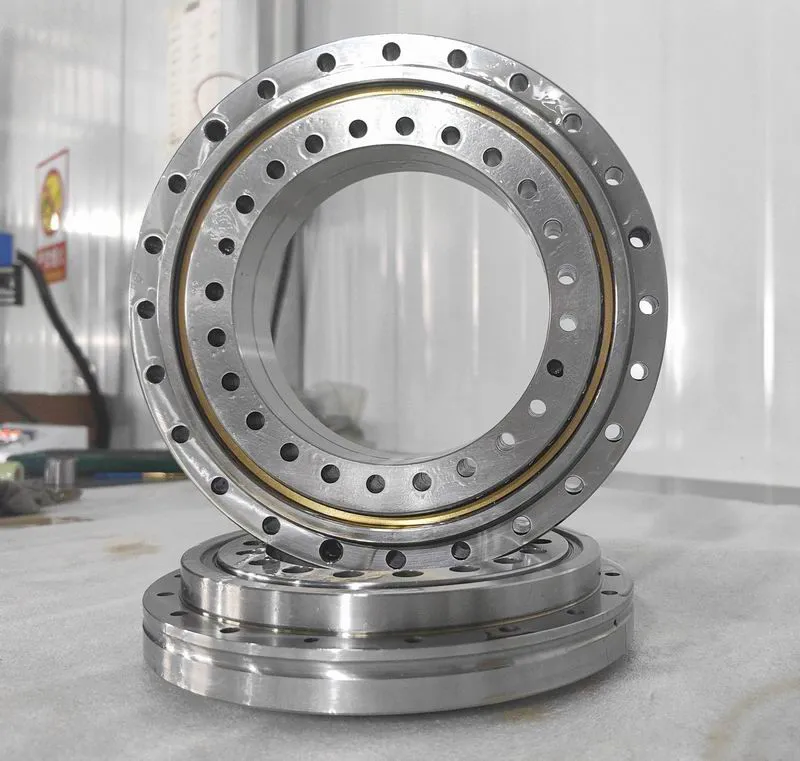
Recently Posted
-
Made in Luoyang – China‘s Bearings Have Come of Age. Here‘s Why You Should Take Notice
July 28, 2026For international buyers who have hesitated to source precision bearings from China, the evidence is now overwhelming: China‘s bea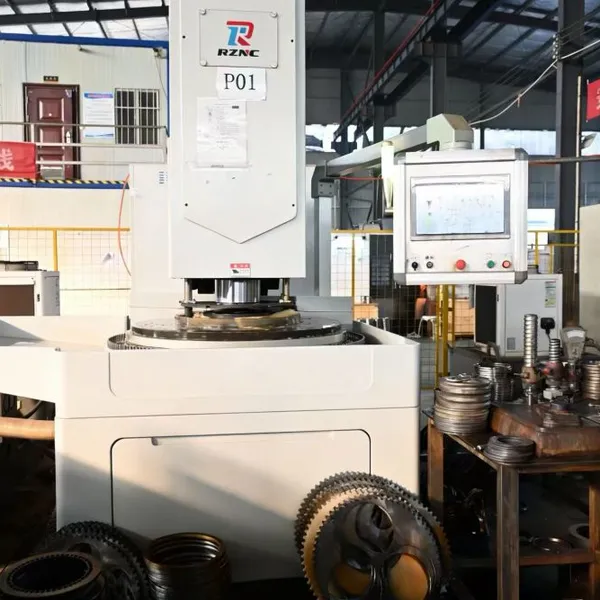 Read More
 -
ORT Series Rotary Table Bearings – The Smart Buyer‘s Choice for High‑Precision CNC Applications
July 28, 2026For CNC machine tool builders, the rotary table bearing is a mission-critical component. Its performance directly determines posit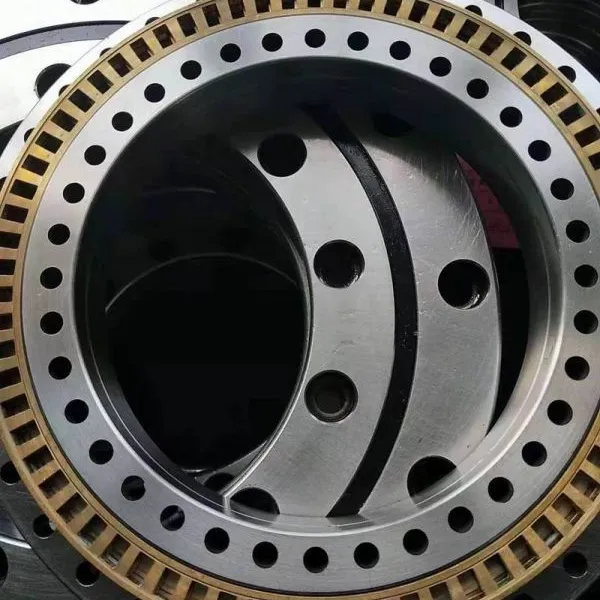 Read More
 -
Seize the Humanoid Robot Boom – The Bearing Market‘s Biggest Growth Opportunity
July 28, 2026The humanoid robot industry is transitioning from research labs to commercial production—and precision bearings are at the center Read More
 -
China’s Bearing Industry Has Come of Age – Here’s Why Global OEMs Are Paying Attention
July 28, 2026If you have historically sourced precision bearings only from traditional European and Japanese manufacturers due to quality conce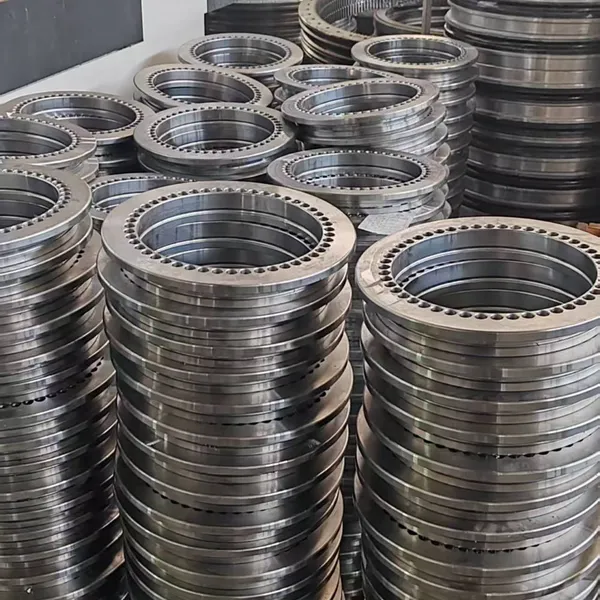 Read More

Contact Us
Recommended Products
-
 Thin-Walled Crossed Roller Bearings ORA 20013NegotiableMOQ: 5 Pieces
 -
Thin-Walled Crossed Roller Bearings ORA 19013NegotiableMOQ: 5 Pieces
-
Thin-Walled Crossed Roller Bearings ORA 6008NegotiableMOQ: 5 Pieces
-
Thin-Walled Crossed Roller Bearings ORA 5008NegotiableMOQ: 5 Pieces
-
Thin-Walled Crossed Roller Bearings ORE 15025NegotiableMOQ: 5 Pieces

-
Thin-Walled Crossed Roller Bearings ORE 14016NegotiableMOQ: 5 Pieces
-
Thin-Walled Crossed Roller Bearings ORE 2508NegotiableMOQ: 5 Pieces
-
Thin-Walled Crossed Roller Bearings ORE 2008NegotiableMOQ: 5 Pieces
-
OKLDF Thrust Angular Contact Ball Bearings Series OKLDF 150NegotiableMOQ: 5 Pieces
-
High Precision Rotary Table Bearings ORT 200NegotiableMOQ: 5 Pieces
-
High Precision Rotary Table Bearings ORT 150NegotiableMOQ: 5 Pieces
-
High Precision Rotary Table Bearings ORT 120NegotiableMOQ: 5 Pieces
-
High Precision Rotary Table Bearings ORT 100NegotiableMOQ: 5 Pieces
-
High Precision Rotary Table Bearings ORT 80NegotiableMOQ: 5 Pieces
-
High Precision Rotary Table Bearings ORT 50NegotiableMOQ: 5 Pieces

-
High Precision Rotary Table Bearings ORT 260NegotiableMOQ: 5 Pieces
-
High Precision Rotary Table Bearings ORT 180NegotiableMOQ: 5 Pieces
-
OKLDF Thrust Angular Contact Ball Bearings Series OKLDF 120NegotiableMOQ: 5 Pieces
-
OKLDF Thrust Angular Contact Ball Bearings Series OKLDF 325NegotiableMOQ: 5 Pieces
-
OKLDF Thrust Angular Contact Ball Bearings Series OKLDF 580NegotiableMOQ: 5 Pieces
